
Moving to France
20 ways to move to France in our guide: 1 talent scheme, 1 working holiday visa, 1 investor route, 4 business / startup routes, 10 work visas, 1 student visa, 2 spouse visas.
No digital nomad visa. Smallest investment: Talent · Business creator, €30k+ ≈ $34k. Checked against official sources on .
France offers a wide range of residence permits, from work and business routes to visitor and working holiday options. Each route has its own requirements, and the figures are set by the records.
Talent schemes · 1

Talent · Renowned person
Income needed: €22k+ a year ≈ $25k
Working holiday · 1

Working Holiday
Age limit: Ages vary by passport
Investing · 1

Talent · €300k investment
Investment needed: €300k+ ≈ $335k
Business / Startup · 4

Entrepreneur / freelancer
Income needed: €1,867+ a month ≈ $2,090
Talent
Work · 10

- Intra-company transfer permitIncome needed: €1,867+ a month ≈ $2,090
- Talent · ResearcherIncome needed: €2,200+ a month ≈ $2,460
- Talent · Innovative co. employeeIncome needed: €40k+ a year ≈ $44k
- Talent · Employee on assignmentIncome needed: €40k+ a year ≈ $44k
- Talent · Qualified employeeIncome needed: €40k+ a year ≈ $44k
- Talent card · medical and pharmacyIncome needed: €41k+ a year ≈ $46k
- Blue CardIncome needed: €59k+ a year ≈ $66k
- Talent · Company officerIncome needed: €67k+ a year ≈ $75k
- Employee residence cardFirst stay: 1 yr
- Seasonal worker cardFirst stay: 3 yrs
Student · 1

Student permit
First stay: 1 yr
Spouse visas · 2

For people married to, or in a partnership with, a citizen or permanent resident.
Spouse of a resident
Income needed: €1,867+ a month ≈ $2,090
Spouse of a citizen
First stay: 1 yr
Free movement and visa-free stays · 2
EU free movement · Lets you live here
Open to 31 passports: Austria, Belgium, Bulgaria, Croatia, Cyprus, Czechia, Denmark, Estonia, Finland, France, Germany, Greece, Hungary, Iceland, Ireland, Italy, Latvia, Liechtenstein, Lithuania, Luxembourg, Malta, Netherlands, Norway, Poland, Portugal, Romania, Slovakia, Slovenia, Spain, Sweden, Switzerland.
Free movement by treaty · Lets you live here
Open to 1 passport: Andorra.
Tax
Newcomers may be eligible for the impatriate regime, which can exclude the expatriation premium from income tax or apply a flat option, and give a partial exemption on certain foreign passive income and gains. This requires French tax domicile each year. Otherwise, the ordinary progressive income tax scale applies to your household income after the family quotient. Tax rules are separate from visa rules.
Special regime
Impatriate regime (Art. 155 B CGI)
30% tax
Details
- On: Expatriation premium, or by option 30% of net remuneration
- Who: Employee or manager called from abroad by a foreign company
Employees and managers recruited from abroad can exclude the impatriation premium (or, by option for those recruited directly abroad, a flat 30% of total net remuneration) from income tax, and the part of pay that relates to work done abroad, until 31 December of the eighth year after taking up the post. By option, a 50% exemption also applies to certain foreign passive income and gains.
Taxed on
Expatriation premium, or by option 30% of net remuneration; plus 50% of certain foreign passive income and gains for treaty countries with administrative-assistance clauses.
Who it applies to
- Employee or manager called from abroad by a foreign company, or recruited directly abroad by a company established in France.
- Not fiscally domiciled in France in the five calendar years before the year of taking up the post.
- Fiscally domiciled in France under Art. 4 B CGI from taking up the post, in each year of the benefit.
- Benefit runs until 31 December of the eighth year after taking up the post in France (posts from 6 July 2016).
Exclusions
- After the period the person is taxed under ordinary rules on all remuneration.
- People who came to France on their own initiative, or already had their home in France when recruited, cannot benefit.
- The exemption of the premium and of pay for work abroad is capped, at the taxpayer's yearly option, at 50% of total remuneration, or the foreign-activity part at 20% of taxable pay net of the premium.
- The pay that stays taxable must be at least equal to the pay for similar functions in the same company or, failing that, in similar companies established in France; any shortfall is added back to taxable pay.
- The 50% exemption on passive income and gains covers income paid from, and securities held in, states with a tax treaty containing an administrative-assistance clause.
Tax residence
Fiscal domicile under Art. 4 B CGI is required in each year of the benefit; the previous five calendar years must have been spent outside French tax domicile.
Visas
Independent of the visa; usually used with talent cards or employee permits.
Other taxes
Social contributions are not exempted by this regime.
Checked against official sources on Change log
Standard rules
French income tax scale 2026 (on 2025 income)
Progressive rates
Details
- On: Net taxable household income divided by family quotient
- Who: Tax domicile in France
- Limit: €12k/yr ≈ $13k
Progressive scale per family-quotient share: 0% to EUR11,600, (≈ $13,000) 11% to EUR29,579, (≈ $33,000) 30% to EUR84,577, (≈ $94,500) 41% to EUR181,917 (≈ $203,000) and 45% above, set by Finance Act 2026-103 of 19 February 2026.
Taxed on
Net taxable household income divided by family quotient.
Who it applies to
- Tax domicile in France.
Limits
- EUR 11,600 a year (≈ $13,000) · 0% band upper limit per share
- EUR 29,579 a year (≈ $33,000) · 11% band upper limit
- EUR 84,577 a year (≈ $94,500) · 30% band upper limit
- EUR 181,917 a year (≈ $203,000) · 41% band upper limit; 45% above
Tax residence
Tax domicile rules in Art. 4 B CGI.
Visas
Visa type does not change the scale.
Other taxes
Social levies and VAT are separate.
Checked against official sources on Change log
Special regime
France micro-entrepreneur regime 2026: turnover ceilings EUR 203,100 (goods) and EUR 83,600 (services), flat social contributions of 12.3% to 25.6%
Tax relief
Details
- On: Annual turnover (chiffre d'affaires) without deduction of actual expenses
- Limit: €203k/yr ≈ $227k
Individual entrepreneurs in France can use the micro-entrepreneur regime in 2026 while annual turnover stays at or below EUR 203,100 (≈ $227,000) for sales of goods or EUR 83,600 (≈ $93,400) for services, paying social contributions on turnover at 12.3% (goods), 21.2% (commercial and craft services) or 25.6% (other liberal services); taxable profit is turnover less a flat allowance of 71%, 50% or 34%, and a liberatory income tax payment of 1%, 1.7% or 2.2% of turnover is optional.
Taxed on
Annual turnover (chiffre d'affaires) without deduction of actual expenses. Social contribution rates on turnover: 12.3% purchase and resale of goods (BIC); 21.2% commercial and craft services (BIC); 25.6% other services (BNC liberal activities); 23.2% regulated liberal professions under Cipav; 6% classified tourist furnished rentals and guest rooms. Unclassified tourist furnished rentals are outside the micro-social scheme from 1 January 2026: income up to EUR 23,000 (≈ $25,700) bears the social levies on investment income instead. Income tax basis: turnover minus a flat allowance (minimum EUR 305 (≈ $340)): 71% goods and on-site food, 50% other BIC services and classified tourist rentals, 34% liberal professions, 30% unclassified tourist furnished rentals; the result is added to the household income taxed under the progressive scale. Optional liberatory payment: 1% (goods and accommodation supply other than furnished rentals), 1.7% (BIC services and classified tourist furnished rentals), 2.2% (BNC).
Who it applies to
- Turnover ceilings for 2026 for a full calendar year: EUR 203,100 (≈ $227,000) for sales of goods and food; EUR 83,600 (≈ $93,400) for services (BIC, BNC) and accommodation; for mixed activity total turnover not above EUR 203,100 (≈ $227,000) and service turnover not above EUR 83,600 (≈ $93,400); Cipav liberal professions EUR 83,600 (≈ $93,400).
- For income tax, the micro regime applies to income received in 2026 when turnover excluding VAT in 2025 or in 2024 did not exceed the ceiling for the activity.
- Liberatory income tax payment option: reference taxable income of the second year before (2024 for 2026) not above EUR 29,315 (≈ $32,700) for one quotient share, increased by 50% per half share and 25% per quarter share; the option is exercised with the Urssaf by 30 September for the following year, or within 3 months of creating the activity.
- Classified tourist furnished rentals and guest rooms: ceiling EUR 83,600 (≈ $93,400) for income received in 2026 (EUR 77,700 (≈ $86,800) applied to income received in 2025); unclassified tourist furnished rentals EUR 15,000 (≈ $16,800).
Exclusions
- Zero turnover collected means no income tax or social contribution due for the period.
- Income tax follows the progressive scale of “French income tax scale 2026” unless the liberatory payment is chosen.
Limits
- EUR 203,100 a year (≈ $227,000) · Turnover ceiling for sales of goods and food, 2026
- EUR 83,600 a year (≈ $93,400) · Turnover ceiling for services (BIC, BNC) and accommodation, 2026
- EUR 83,600 a year (≈ $93,400) · Turnover ceiling for classified tourist furnished rentals and guest rooms, income received in 2026 (EUR 77,700 (≈ $86,800) for income received in 2025)
- EUR 15,000 a year (≈ $16,800) · Turnover ceiling for unclassified tourist furnished rentals
- EUR 29,315 a year (≈ $32,700) · Reference taxable income per quotient share for the liberatory payment in 2026 (income of 2024)
Tax residence
The regime concerns individual entrepreneurs registered in France; income tax is paid on the household's French tax domicile basis (see “French income tax scale 2026”).
Visas
The regime depends on the registered activity, not on the visa category.
Other taxes
VAT franchise thresholds and the CFE and professional training contributions apply separately.
Checked against official sources on Change log
Checked against official sources on Change log
France in pictures



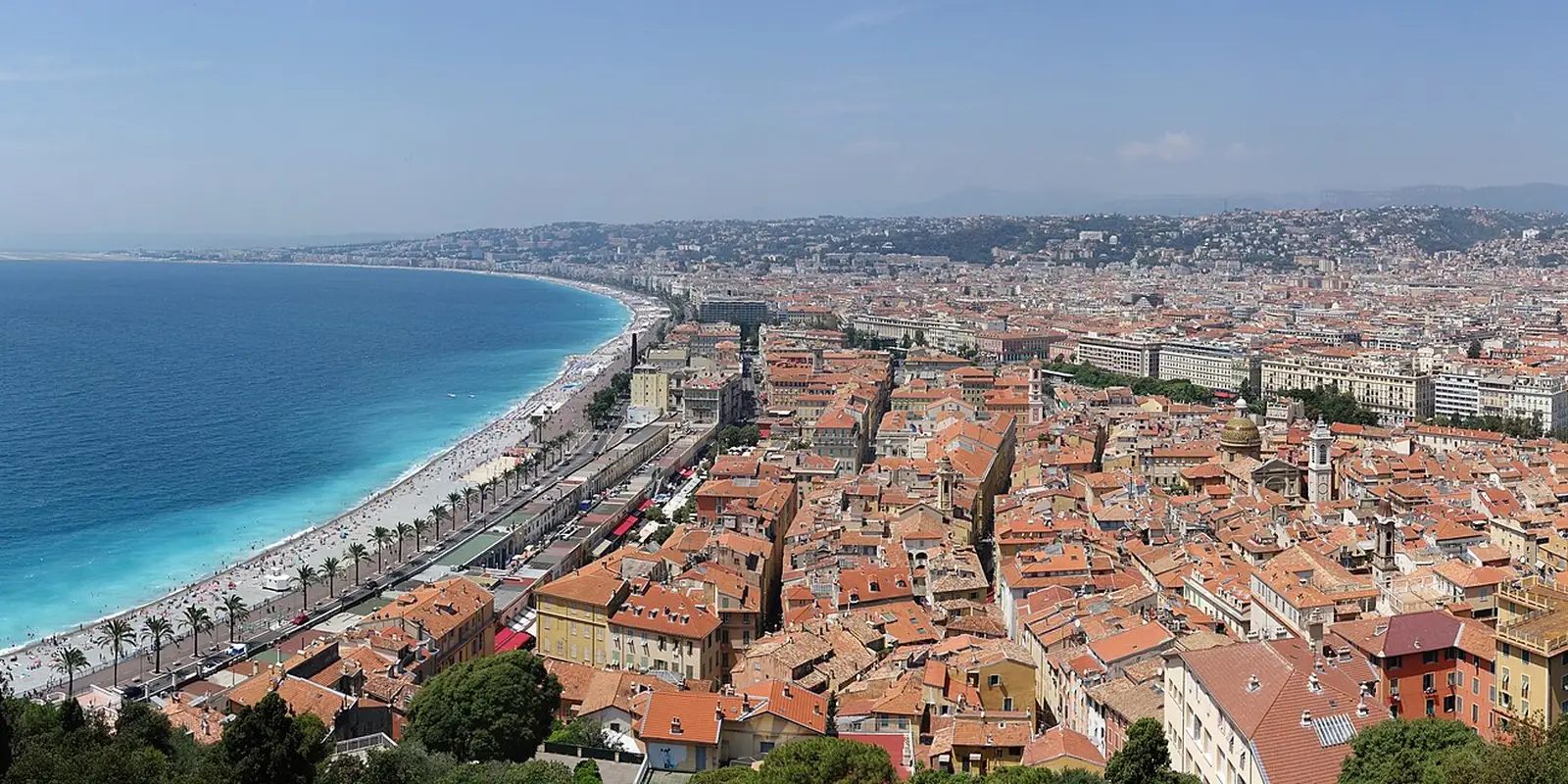
Shorter stays · 1
Retire or live on savings
Visitor card
Income needed: €1,478+ a month ≈ $1,650
Switch to later · 1
Work
Graduate job search
Income needed: €2,801+ a month ≈ $3,130
Arriving in France: first steps
- Arrange health cover, as required for your stay.
- Provide proof of a residential address in France.
- Open a French bank account for salary, benefits, and daily transactions.
- Complete any registration or residence formalities with the local authorities.
- Keep your residence permit and passport with you, and check renewal dates.
- If you work, ensure your employer has the necessary authorisation or that your permit allows the activity.
Questions people ask
What special talent visas does France have?
France has 1 talent scheme. Talent · Renowned person asks for an income of at least EUR 22,404.2 a year (≈ $25,000) and gives a first stay of 4 years that can be renewed.
Does France have a working holiday visa?
Yes. France has 1 working holiday visa. Working Holiday gives a first stay of 1 year.
How much do you need to invest for residency in France?
France has 1 investor route. Talent · €300k investment asks for an investment of at least EUR 300,000 (≈ $335,000) and gives a first stay of 4 years that can be renewed.
Can I move to France by starting a business?
France has 4 business or startup routes. Entrepreneur / freelancer asks for an income of at least EUR 1,867.02 a month (≈ $2,090) and gives a first stay of 1 year that can be renewed. Talent · Artist asks for an income of at least EUR 1,306.91 a month (≈ $1,460) and gives a first stay of 4 years that can be renewed. Talent · Business creator asks for an investment of at least EUR 30,000 (≈ $33,500) and gives a first stay of 4 years that can be renewed.
What work visas does France offer foreigners?
France has 10 work visas. Intra-company transfer permit asks for a salary of at least EUR 1,867.02 a month (≈ $2,090) and gives a first stay of 3 years. Employee residence card gives a first stay of 1 year that can be renewed. Seasonal worker card gives a first stay of 3 years that can be renewed.
How do I get a student visa for France?
France has 1 student visa. Student permit gives a first stay of 1 year that can be renewed.
Can I join my spouse or partner in France?
Yes. France has 2 spouse visas. Spouse of a resident asks for an income of at least EUR 1,867.02 a month (≈ $2,090) and gives a first stay of 1 year that can be renewed. Spouse of a citizen gives a first stay of 1 year that can be renewed.
Compare with
≈ USD figures are approximate: daily reference rates from ExchangeRate-API, dated 12 Oct 2026, refreshed when the site is updated.
Ask the AI about France AI
An AI assistant answers from the published records on this page and cites them. It can't assess your personal eligibility. Don't include personal details.