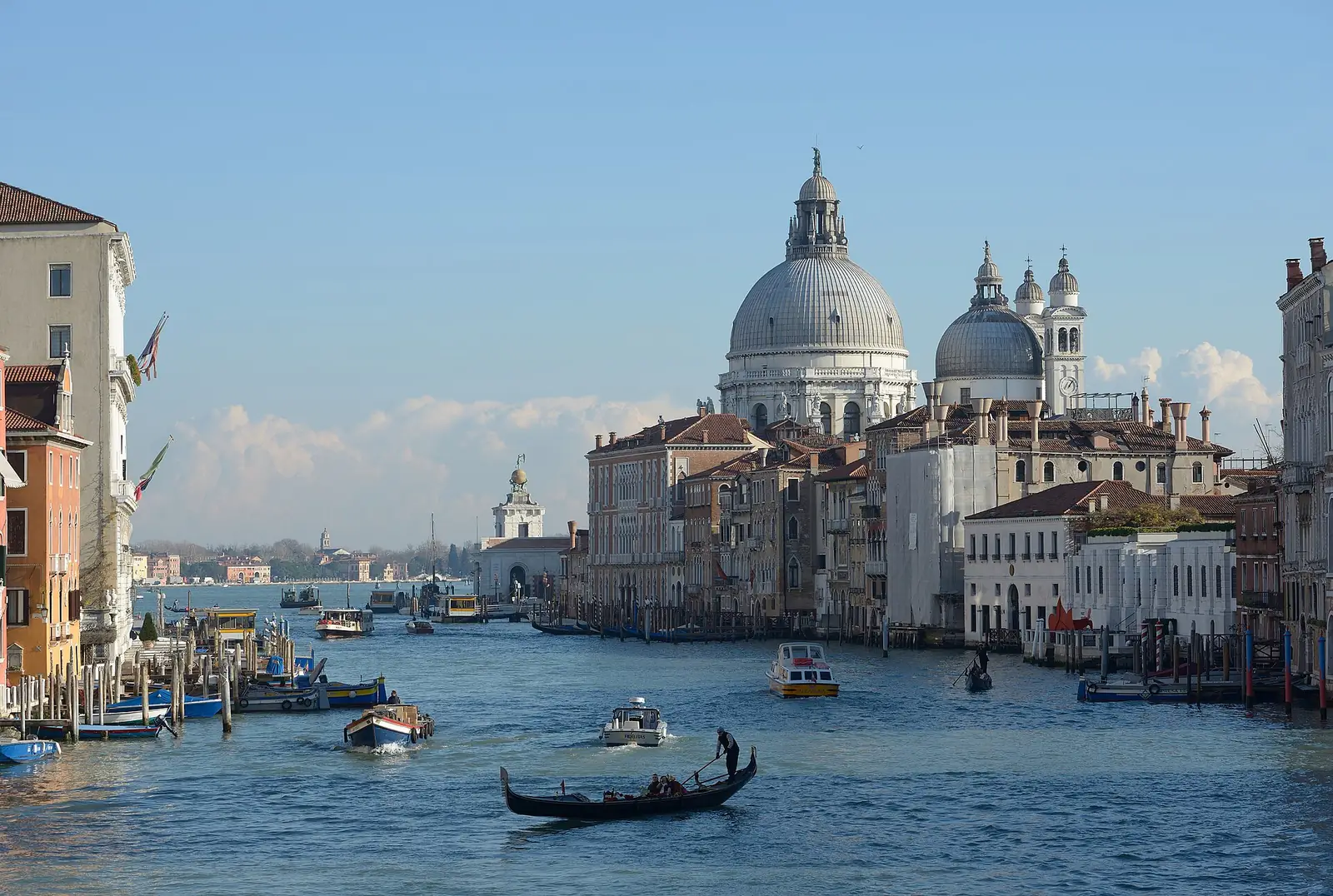
Moving to Italy
18 ways to move to Italy in our guide: 4 working holiday visas, 1 nomad / remote-work visa, 4 investor routes, 1 pay-to-stay route, 2 business / startup routes, 2 work visas, 1 student visa, 1 route by nationality or ancestry, 2 spouse visas.
Remote workers: Digital nomad visa, from €25k a year ≈ $28k. Smallest investment: Investor Visa · €250k start-up, €250k+ ≈ $279k. Tax for newcomers: Substitute tax for new residents on foreign-source income, Flat lump sum EUR 300,000. Checked against official sources on .
Italy offers a range of routes for non-EU nationals, from investment and remote work to study and family. Each has its own requirements and application process, and the records here set out the main options.
Working holiday · 4

Nomad / Remote work · 1

Digital nomad visa
Income needed: from €25k a year ≈ $28k
Investing · 4

Investor Visa
Investment needed: from €250k ≈ $279k
Retire or live on savings · 1

Elective residence
Income needed: €31k+ a year ≈ $35k
Business / Startup · 2

Startup Visa
Savings needed: €50k+ ≈ $56k
Self-employment visa
Income needed: €8,500+ a year ≈ $9,500
Work · 2

Blue Card
First stay: 2 yrs
Work visa (Decreto Flussi)
Student · 1

Student visa
Savings needed: €10k+ a year ≈ $11k
For your nationality or ancestry · 1

Open only to citizens of certain countries or to people with family roots here. Unlike free movement, each needs an application.
Italian citizenship by descent
Spouse visas · 2

For people married to, or in a partnership with, a citizen or permanent resident.
Spouse of a resident
Income needed: €11k+ a year ≈ $12k
Spouse of a citizen
First stay: 5 yrs
Free movement and visa-free stays · 1
EU free movement · Lets you live here
Open to 31 passports: Austria, Belgium, Bulgaria, Croatia, Cyprus, Czechia, Denmark, Estonia, Finland, France, Germany, Greece, Hungary, Iceland, Ireland, Italy, Latvia, Liechtenstein, Lithuania, Luxembourg, Malta, Netherlands, Norway, Poland, Portugal, Romania, Slovakia, Slovenia, Spain, Sweden, Switzerland.
Tax
New residents may be able to choose a special tax regime. The records describe a substitute tax on foreign-source income, an impatriate workers regime for employment and self-employment income produced in Italy, and a foreign pensioners regime for those moving to certain southern municipalities. Otherwise, residents are taxed on worldwide income under ordinary IRPEF rates.
Special regime
Substitute tax for new residents on foreign-source income (Art. 24-bis TUIR, flat tax)
Tax relief
Details
- Who: Not resident in Italy for at least nine of the ten tax periods before the option starts
- Limit: €300k/yr ≈ $335k
Optional annual lump sum replacing Italian tax on foreign-source income: EUR300,000 (≈ $335,000) for people transferring residence from 1 January 2026 (Law 199/2025), EUR200,000 (≈ $223,000) for transfers between 11 August 2024 and 31 December 2025, EUR100,000 (≈ $112,000) for earlier transfers; the effect ends after fifteen years.
Taxed on
Foreign-source income of eligible individuals who transfer residence to Italy; Italian-source income is taxed under ordinary rules.
Who it applies to
- Not resident in Italy for at least nine of the ten tax periods before the option starts.
- The option is made in the tax return for the transfer year or the next one; an advance ruling request (interpello) is possible.
- Family members who meet the same residence test can be added at EUR50,000 (≈ $55,900) each a year from 1 January 2026 (EUR25,000 (≈ $27,900) for earlier cohorts).
- The option can exclude chosen foreign states, whose income is then taxed under ordinary rules with a foreign tax credit.
Exclusions
- Italian-source income stays under ordinary taxation.
- Gains on substantial participations (Art. 67(1)(c) TUIR) realised in the first five option periods are outside the lump sum.
- Revocation or loss of the option (for example for non-payment) bars a new option.
Limits
- EUR 300,000 a year (≈ $335,000) · Main taxpayer: residence transferred from 1 January 2026 (Law 199/2025 art. 1 paras. 25-26 raised EUR200,000 (≈ $223,000) to EUR300,000 (≈ $335,000))
- EUR 50,000 a year (≈ $55,900) · Per family member, residence transferred from 1 January 2026
- EUR 200,000 a year (≈ $223,000) · Main taxpayer: residence transferred 11 August 2024 to 31 December 2025
- EUR 25,000 a year (≈ $27,900) · Per family member, transfers before 1 January 2026
- EUR 100,000 a year (≈ $112,000) · Main taxpayer: transfers before 11 August 2024
Tax residence
The cohort is set by the date residence is transferred to Italy. The lump sum is paid in one instalment by the balance-payment deadline, and the option lapses after fifteen tax periods.
Visas
No visa is needed for the election; it is a tax option.
Other taxes
Italian VAT, social contributions and local taxes are separate.
Checked against official sources on Change log
Special regime
Impatriate workers regime (Art. 5 D.Lgs. 209/2023)
Tax relief
Details
- On: Employment-type and professional income produced in Italy up to EUR600,000 (≈ $670,000) per year
- Limit: €600k/yr ≈ $670k
Only 50% of qualifying employment and self-employment income produced in Italy, up to EUR600,000 (≈ $670,000) per year, counts toward taxable income; 40% for workers with a minor child.
Taxed on
Employment-type and professional income produced in Italy up to EUR600,000 (≈ $670,000) per year; 50% of it (40% with a minor child) enters taxable income and is taxed at ordinary IRPEF rates.
Who it applies to
- Commit to Italian tax residence for at least four years and not have been resident in the three preceding tax periods.
- If the worker keeps the same employer or group as abroad, the required time abroad is six periods (seven if previously employed in Italy by that group).
- Work performed mostly in Italy and meet high-qualification or specialisation requirements of D.Lgs. 108/2012 and D.Lgs. 206/2007.
- Applies from the transfer year and the four following periods; lost with recovery if residence ends before four years.
- The 40% inclusion applies when the worker moves with a minor child or has or adopts one during the regime, and the child is resident in Italy.
Exclusions
- Income above EUR600,000 (≈ $670,000) per year receives no reduction.
Limits
- EUR 600,000 a year (≈ $670,000) · Annual income cap for the 50% (or 40%) inclusion
Tax residence
Benefit period five tax periods; three extra periods apply to people who moved their registered residence in 2024 and own a home in Italy used as their main residence that was bought by 31 December 2023 and within the 12 months before the move.
Visas
Independent of visa type.
Other taxes
Social contributions and VAT are separate.
Checked against official sources on Change log
Special regime
Foreign pensioners regime: 7% substitute tax in southern municipalities (Art. 24-ter TUIR)
7% tax
Details
- On: Foreign-source income of any category
7% substitute tax on all foreign-source income for each of nine tax periods for foreign pension recipients moving to eligible southern municipalities; the population cap is 30,000 inhabitants from 7 April 2026 (previously 20,000).
Taxed on
Foreign-source income of any category.
Who it applies to
- Receive pension income paid from abroad and transfer tax residence to a municipality in Sicilia, Calabria, Sardegna, Campania, Basilicata, Abruzzo, Molise or Puglia with no more than 30,000 inhabitants, or to a municipality of 30,000 or fewer affected by the 2009 or 2016 earthquakes.
- Not have been tax resident in Italy in the five tax periods before the one in which the option takes effect.
- Move from a country that has an administrative cooperation agreement on tax matters in force with Italy.
- Option valid for nine tax periods; municipal population is read from ISTAT data at 1 January of the year before the first period.
Exclusions
- Regions and municipalities outside the list are not eligible.
Tax residence
Option is exercised in the return for the transfer year.
Visas
Independent of visa type.
Other taxes
Italian-source income and local taxes remain under ordinary rules.
Checked against official sources on Change log
Standard rules
Italian personal income tax (IRPEF) ordinary rates 2026
Worldwide income
Details
- On: Worldwide income of residents, net of deductible charges
- Limit: €28k/yr ≈ $31k
Residents are taxed on worldwide income, including foreign-source income: 23% up to EUR28,000, (≈ $31,300) 33% from EUR28,000 (≈ $31,300) to EUR50,000 (≈ $55,900) (reduced from 35% by the 2026 Budget Law), and 43% above EUR50,000 (≈ $55,900); non-residents are taxed on Italian-source income only.
Taxed on
Worldwide income of residents, net of deductible charges; regional and municipal surtaxes are additional.
Who it applies to
- Italian tax resident: for most of the tax year (at least 183 days, 184 in leap years) the person has habitual residence or domicile in Italy, is physically present there, or is registered in the resident population register.
Exclusions
- Taxpayers with total income above EUR200,000 (≈ $223,000) do not keep the benefit of the lower second rate.
Limits
- EUR 28,000 a year (≈ $31,300) · 23% up to this amount
- EUR 50,000 a year (≈ $55,900) · 33% between EUR28,000 (≈ $31,300) and this amount; 43% above
Days in the country
- At least 183 days in tax year (184 days in leap years) · A person who for most of the year (at least 183 days, 184 in leap years) satisfies at least one residence condition is resident in Italy for income tax.
Tax residence
Residents are taxed on income wherever produced; non-residents are taxed only on Italian-source income.
Visas
Independent of visa type.
Other taxes
Regional and municipal surtaxes, social contributions and VAT are separate.
Checked against official sources on Change log
Special regime
Flat-rate regime for self-employed and sole traders (regime forfetario)
15% tax
Details
- Who: Revenue or fees in the previous year not above EUR85,000 (≈ $95,000)
- Limit: €85k/yr ≈ $95k
A single 15% substitute tax on a flat-rate taxable profit for self-employed people with revenue up to EUR85,000 (≈ $95,000); 5% for the first five years of a genuinely new activity.
Taxed on
Revenue or fees multiplied by the profitability coefficient of the activity, less compulsory social contributions; the 15% replaces income tax and regional and municipal surtaxes.
Who it applies to
- Revenue or fees in the previous year not above EUR85,000, (≈ $95,000) and no more than EUR20,000 (≈ $22,300) gross spent on employees and collaborators.
- Residents in Italy, or residents of an EU or EEA state that exchanges information who earn at least 75% of their total income in Italy.
- The 5% rate applies for five years if no business or professional activity was carried on in the previous three years and the activity is not a continuation of employment or earlier work.
Exclusions
- People using special VAT regimes or other flat-rate income regimes.
- People whose work is mainly for a current or recent (two previous years) employer.
- Employees with employment income above EUR30,000 (≈ $33,500) in the previous year (EUR35,000 (≈ $39,100) for 2025 and 2026).
- Anyone who partners in certain companies or controls limited companies with related activity.
Limits
- EUR 85,000 a year (≈ $95,000) · Revenue or fee ceiling to enter and stay in the regime (leaving the next year if exceeded)
- EUR 100,000 a year (≈ $112,000) · Above this the regime ends in the same year and VAT is due from the transaction that crosses it
- EUR 20,000 a year (≈ $22,300) · Maximum gross spending on employees and collaborators
Tax residence
Non-residents are excluded, except residents of EU and EEA states that exchange information and who earn at least 75% of total income in Italy.
Visas
Independent of visa type; relevant to holders of self-employment permits who are tax resident in Italy.
Other taxes
Social contributions and VAT rules are separate.
Checked against official sources on Change log
Checked against official sources on Change log
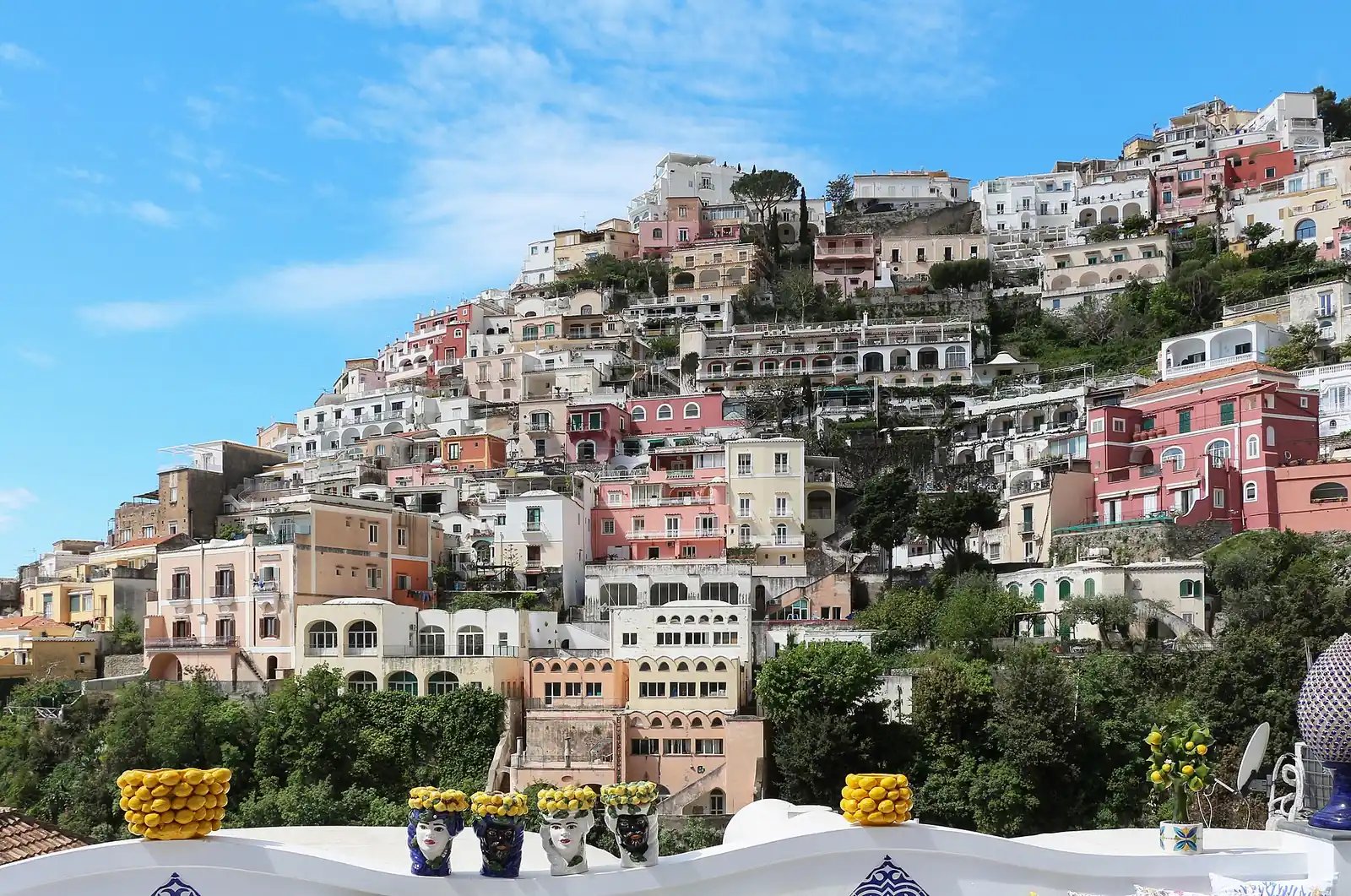
Italy in pictures



Switch to later · 1
Business / Startup
Startup Hub (in-country)
Savings needed: €50k+ ≈ $56k
Path to permanent residence · 1
- Citizenship after 2 years · Recognition of Italian citizenship by descent (iure sanguinis, Law 91/1992 as amended by Decree-Law 36/2025 and Law 74/2025)
Arriving in Italy: first steps
- Apply for a residence permit at the Questura within the time stated for your route, if required.
- Register your address with the local comune.
- Obtain health insurance or register with the national health service, as applicable.
- Open a bank account if needed for your route or daily life.
- Keep copies of your permit application and documents with you.
- Check any route-specific steps, such as reporting to the police or completing tax registration.
Questions people ask
Does Italy have a working holiday visa?
Yes. Italy has 4 working holiday visas. Working Holiday · Australia is for ages 18 to 35, asks for savings of at least EUR 10,000 (≈ $11,200) and gives a first stay of 1 year. Working Holiday · Canada is for ages 18 to 35 and gives a first stay of 1 year. Working Holiday · Japan is for ages 18 to 30, asks for savings of at least EUR 10,400 (≈ $11,600) and gives a first stay of 1 year.
What is the Italy digital nomad visa income requirement in 2026?
Italy has 1 nomad or remote-work visa. Digital nomad visa asks for an income from EUR 24,789 a year (≈ $27,700) and gives a first stay of 1 year that can be renewed.
How much do you need to invest for residency in Italy?
Italy has 4 investor routes. Investor Visa · €1M donation asks for an investment of at least EUR 1,000,000 (≈ $1,120,000) and gives a first stay of 2 years that can be renewed. Investor Visa · €2M bonds asks for an investment of at least EUR 2,000,000 (≈ $2,230,000) and gives a first stay of 2 years that can be renewed. Investor Visa · €250k start-up asks for an investment of at least EUR 250,000 (≈ $279,000) and gives a first stay of 2 years that can be renewed.
Can I retire or live in Italy on my savings or pension?
Italy has 1 retirement or pay-to-stay route. Elective residence asks for an income of at least EUR 31,000 a year (≈ $34,600).
Can I move to Italy by starting a business?
Italy has 2 business or startup routes. Startup Visa asks for savings of at least EUR 50,000 (≈ $55,900) and gives a first stay of 1 year that can be renewed. Self-employment visa asks for an income of at least EUR 8,500 a year (≈ $9,500) and gives a first stay of 2 years that can be renewed.
What work visas does Italy offer foreigners?
Italy has 2 work visas. Blue Card gives a first stay of 2 years that can be renewed. There is also Work visa (Decreto Flussi).
How do I get a student visa for Italy?
Italy has 1 student visa. Student visa asks for savings of at least EUR 10,179.85 a year (≈ $11,400).
Can my nationality or ancestry give me residence in Italy?
Yes. Italy has 1 route by nationality or ancestry. It is Italian citizenship by descent.
Can I join my spouse or partner in Italy?
Yes. Italy has 2 spouse visas. Spouse of a resident asks for an income of at least EUR 10,651.68 a year (≈ $11,900). Spouse of a citizen gives a first stay of 5 years that can be renewed.
Does Italy have a special tax regime for new residents?
Yes: Substitute tax for new residents on foreign-source income (Art. 24-bis TUIR, flat tax). Optional annual lump sum replacing Italian tax on foreign-source income: EUR300,000 (≈ $335,000) for people transferring residence from 1 January 2026 (Law 199/2025), EUR200,000 (≈ $223,000) for transfers between 11 August 2024 and 31 December 2025, EUR100,000 (≈ $112,000) for earlier transfers; the effect ends after fifteen years. It is separate from the visa and has its own conditions.
Compare with
≈ USD figures are approximate: daily reference rates from ExchangeRate-API, dated 12 Oct 2026, refreshed when the site is updated.
Ask the AI about Italy AI
An AI assistant answers from the published records on this page and cites them. It can't assess your personal eligibility. Don't include personal details.