
Moving to Vietnam
11 ways to move to Vietnam in our guide: 4 investor routes, 5 work visas, 1 student visa, 1 spouse visa.
No digital nomad visa. Smallest investment: Investor visa ĐT3, ₫3B+ ≈ $116k. Checked against official sources on .
Vietnam offers a set of visa routes that line up with how you plan to spend your time here: investing, working for a company, studying, or coming in under a special talent scheme. The investor tiers are built around the size of your capital contribution, while the work and student categories are tied to a sponsor, an employer, or an educational institution.
Investing · 4

Work · 5

Student · 1

Student visa DH
Spouse visas · 1

For people married to, or in a partnership with, a citizen or permanent resident.
Spouse of a citizen
Tax
Vietnam taxes individuals on employment, business and other income. Tax residents are taxed on worldwide income, while nonresidents are taxed on Vietnam-source income. Tax residence is separate from immigration residence, so your visa category does not settle the question on its own.
Standard rules
Vietnam individual income tax: residence, worldwide scope and 2026 rates (Law 109/2025/QH15)
Progressive rates
Details
- On: Taxable income arising inside and outside Vietnam for residents
- Limit: ₫120M/yr ≈ $4,630
Vietnam tax residents (183 days or more in a calendar year or in 12 consecutive months from first arrival, or with a regular residence) are taxed on income inside and outside Vietnam; resident employment income is taxed on a 5% to 35% progressive scale from the 2026 tax period.
Taxed on
Taxable income arising inside and outside Vietnam for residents; Vietnam-source income for non-residents, whose employment income is taxed at a flat 20% on pay for work in Vietnam regardless of where it is paid.
Who it applies to
- Resident: present in Vietnam 183 days or more in a calendar year or in 12 consecutive months from the first day of presence, or having a regular residence (registered permanent residence or a lease with a fixed term) (article 2).
- Resident employment income scale, annual taxable income (article 9): up to VND 120 million (≈ $4,630) 5%; over 120 up to 360 million 10%; over 360 up to 720 million 20%; over 720 million up to 1.2 billion 30%; over 1.2 billion 35%.
- Personal deduction VND 15.5 million (≈ $600) a month (VND 186 million (≈ $7,180) a year) and VND 6.2 million (≈ $240) a month per dependant (article 10).
Exclusions
- Non-residents are taxed only on income arising in Vietnam; their employment income for work in Vietnam is taxed at a flat 20% wherever it is paid (article 21).
Limits
- VND 120,000,000 a year (≈ $4,630) · Top of the 5% band for resident employment income
- VND 360,000,000 a year (≈ $13,900) · Top of the 10% band
- VND 720,000,000 a year (≈ $27,800) · Top of the 20% band
- VND 1,200,000,000 a year (≈ $46,300) · Top of the 30% band; 35% above
- VND 186,000,000 a year (≈ $7,180) · Personal deduction for the taxpayer (VND 15.5 million (≈ $600) a month)
Days in the country
- At least 183 days in calendar year or 12 consecutive months from first day of presence · Resident individual for personal income tax
Tax residence
The law takes effect on 1 July 2026; the rules on business income and resident employment income apply from the 2026 tax period (article 29).
Visas
Tax residence depends on days present or regular residence, not visa type.
Other taxes
Social, health and unemployment insurance contributions are deductible from employment income; VAT and corporate taxes are separate.
Checked against official sources on Change log
Special regime
Vietnam: 5-year personal income tax exemption for high-quality digital technology and high-tech personnel (Law 109/2025/QH15 article 5)
0% tax
Details
- On: Salary, wages and similar employment income of eligible personnel
Salary and wage income of high-quality digital technology industry personnel in listed activities, and of high-technology personnel doing high-tech or strategic technology research and development, is exempt from personal income tax for 5 years.
Taxed on
Salary, wages and similar employment income of eligible personnel.
Who it applies to
- Digital technology personnel: income from projects in concentrated digital technology zones, from research, development and production of key digital products, semiconductor chips and artificial intelligence systems, or from digital-industry workforce training (article 5(2)).
- High-technology personnel doing research and development of high technology or strategic technology listed under the high-technology law (article 5(3)).
- The law leaves the detailed conditions to a Government decree (article 5(6)) and does not say when the 5 years start.
Exclusions
- Other income of the same person is taxed under the ordinary rules.
Visas
The exemption depends on the activity, not the visa. Holding a UĐ1 visa does not by itself give the exemption.
Other taxes
Social insurance contributions are separate.
Checked against official sources on Change log
Standard rules
Vietnam: personal income tax on business income of resident individuals (Law 109/2025/QH15 article 7)
20% tax
Details
- On: Taxable income equal to revenue less related expenses for the tax period
- Limit: ₫500M/yr ≈ $19k
Resident individuals with annual business revenue of VND 500 million (≈ $19,300) or less pay no personal income tax; above that, tax is charged on profit at 15% to 20% by revenue band, or on revenue above VND 500 million (≈ $19,300) at rates of 0.5% to 5% for revenue up to VND 3 billion (≈ $116,000).
Taxed on
Taxable income equal to revenue less related expenses for the tax period; alternatively revenue above VND 500 million (≈ $19,300) multiplied by a rate by activity for individuals with revenue up to VND 3 billion (≈ $116,000).
Who it applies to
- Resident individual carrying on business, including independent professional practice and e-commerce or digital-platform business.
Exclusions
- Rental of real estate other than accommodation business is taxed at 5% on revenue above VND 500 million (≈ $19,300).
Limits
- VND 500,000,000 a year (≈ $19,300) · Annual revenue up to this level: no personal income tax
- VND 3,000,000,000 a year (≈ $116,000) · Revenue over 500 million up to 3 billion: 15% on profit, or optional rates on revenue above 500 million (goods distribution 0.5%, services 2%, production and transport 1.5%, other business 1%); revenue over 3 billion up to 50 billion: 17% on profit
- VND 50,000,000,000 a year (≈ $1,930,000) · Revenue above this level: 20% on profit
Days in the country
- At least 183 days in calendar year or 12 consecutive months from first day of presence · Resident individual for personal income tax
Tax residence
Applies from the 2026 tax period (article 29).
Visas
Tax treatment follows residence and activity, not visa type; business activity under a visa class still follows licensing rules.
Other taxes
VAT and social insurance are separate.
Checked against official sources on Change log
Checked against official sources on Change log
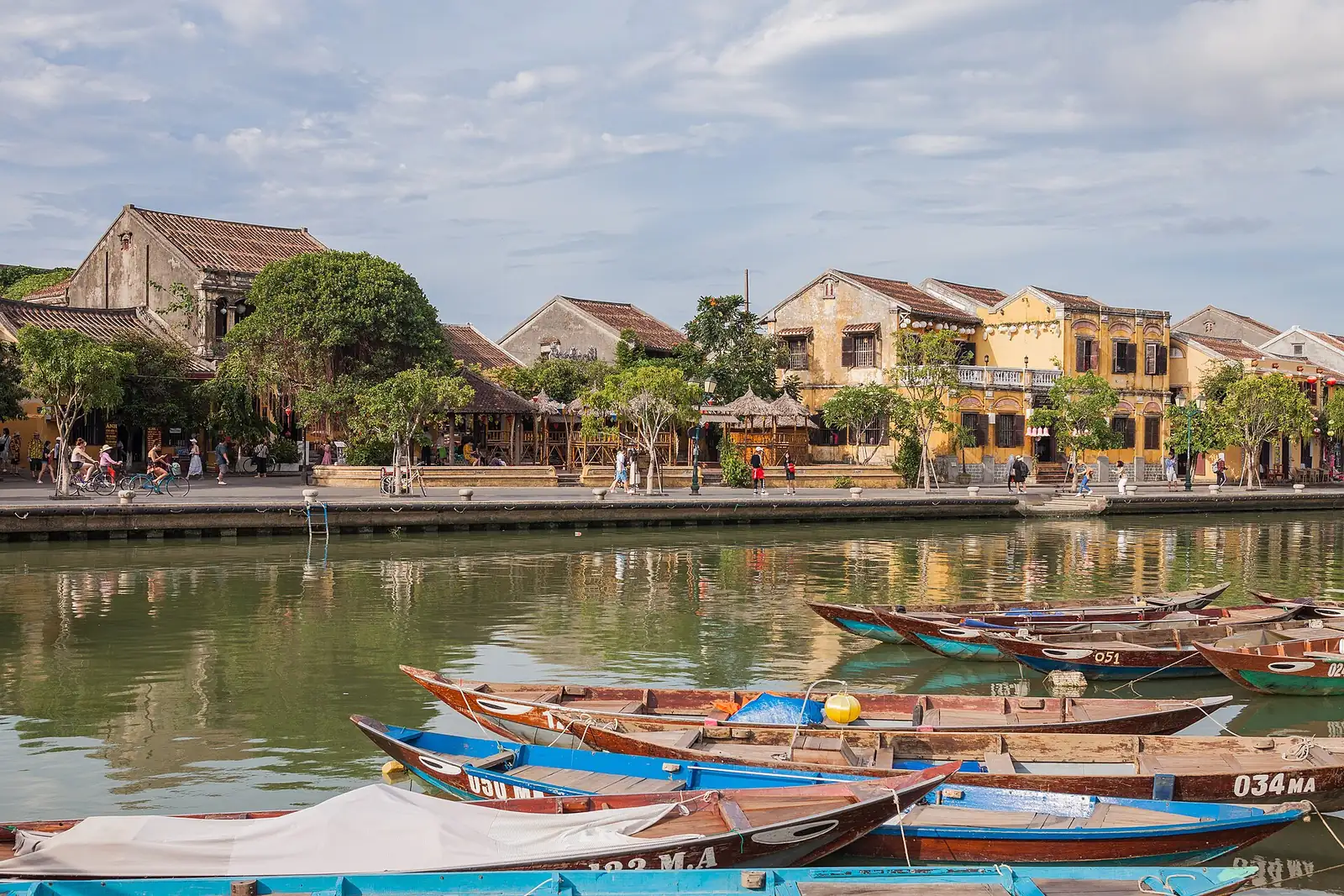
Vietnam in pictures



Path to permanent residence · 1
- PR · Permanent residence (thường trú)
Arriving in Vietnam: first steps
- Arrange health cover that will work in Vietnam, since the records do not describe any automatic public health entitlement on arrival.
- Have a stable address ready for registration and administrative steps, as residence matters are handled separately from the visa itself.
- Set up a local bank account for everyday payments and for any investment or salary flows your route requires.
- Complete any required registration with the local authorities once you have your address and residence card or visa status in hand.
- Keep your tax position in mind from the start, since immigration residence and tax residence are assessed separately.
Questions people ask
How much do you need to invest for residency in Vietnam?
Vietnam has 4 investor routes. Investor visa ĐT1 asks for an investment of at least VND 100,000,000,000 (≈ $3,860,000). Investor visa ĐT2 asks for an investment of at least VND 50,000,000,000 (≈ $1,930,000). Investor visa ĐT3 asks for an investment of at least VND 3,000,000,000 (≈ $116,000).
What work visas does Vietnam offer foreigners?
Vietnam has 5 work visas. There is also Business visa DN1/DN2, UĐ1 digital talent visa and Foreign lawyer visa (LS).
How do I get a student visa for Vietnam?
Vietnam has 1 student visa. It is Student visa DH.
Can I join my spouse or partner in Vietnam?
Yes. Vietnam has 1 spouse visa. It is Spouse of a citizen.
Compare with
≈ USD figures are approximate: daily reference rates from ExchangeRate-API, dated 12 Oct 2026, refreshed when the site is updated.
Ask the AI about Vietnam AI
An AI assistant answers from the published records on this page and cites them. It can't assess your personal eligibility. Don't include personal details.