
Moving to San Marino
17 ways to move to San Marino in our guide: 1 talent scheme, 1 working holiday visa, 1 nomad / remote-work visa, 5 investor routes, 1 pay-to-stay route, 2 business / startup routes, 3 work visas, 1 student visa, 2 spouse visas.
Remote workers: Atypical residence. Smallest investment: Elective residence · property, €500k+ ≈ $559k. Checked against official sources on .
San Marino is a small, orderly state where residence is often tied to a specific contribution or investment. Visas and tax are separate.
Talent schemes · 1

Recognised merit residence
Working holiday · 1

Working Holiday
Age limit: Ages vary by passport
Nomad / Remote work · 1

Atypical residence
Investing · 5

Retire or live on savings · 1

Pensioner residence
Income needed: €120k+ a year ≈ $134k
Business / Startup · 2

Company owner residence
Savings needed: €75k+ ≈ $84k
Entrepreneur permit
First stay: 2 yrs
Work · 3

Key manager residence
Seasonal work permit
First stay: 1 yr
Temporary work permit
First stay: 1 yr
Student · 1

Student permit
First stay: 1 yr
Spouse visas · 2

For people married to, or in a partnership with, a citizen or permanent resident.
Spouse of a resident
Income needed: €12k+ a year ≈ $13k
Spouse of a citizen
Tax
Tax residents are taxed on all income wherever produced under the general income tax (IGR) at progressive rates; non-residents are taxed only on San Marino-source income. A person is resident if registered residence in the State or actual residence there lasts for the majority of the tax period. Special regimes exist for atypical residence, including a substitute tax on foreign-source income and a separate regime for pension income, but these are separate from the residence routes above and have their own conditions.
Standard rules
General income tax (IGR): progressive rates of 9% to 35% on worldwide income of residents
Progressive rates
Details
- On: Total income of the tax period, from any source, of persons resident in the State
- Limit: €10k/yr ≈ $11k
Tax residents are taxed on all income wherever produced under the general income tax (IGR) at progressive rates of 9% to 35% (Annex C of Law 166/2013); from tax year 2026 the EUR 9,000 (≈ $10,100) income deduction and the EUR 100 (≈ $110) tax credit no longer apply and a credit for SMaC card spending in San Marino applies instead. Non-residents are taxed only on income produced in San Marino.
Taxed on
Total income of the tax period, from any source, of persons resident in the State; non-residents on San Marino-source income only. Compulsory social-security contributions of employees are fully deductible from employment income.
Who it applies to
- Natural persons resident for the majority of the tax period, by registered residence or by actually living in the territory, are taxed on worldwide income.
- Rates by taxable income: 9% up to EUR 10,000 (≈ $11,200); 13% from EUR 10,000.01 (≈ $11,200) to EUR 18,000 (≈ $20,100); 17% to EUR 28,000 (≈ $31,300); 21% to EUR 38,000 (≈ $42,500); 25% to EUR 50,000 (≈ $55,900); 28% to EUR 65,000 (≈ $72,600); 31% to EUR 80,000 (≈ $89,400); 35% above EUR 80,000 (≈ $89,400).
- From tax year 2026 (Law 141/2025) the EUR 9,000 (≈ $10,100) deduction from employment, pension and similar income (Annex C, Article C1(3)) and the EUR 100 (≈ $110) tax credit for taxable income up to EUR 15,000 (≈ $16,800) (Article 16(9)) are repealed.
- SMaC card credit (Article 16(8 bis) and Annex E): a tax credit for spending with the SMaC card in San Marino; up to EUR 752.40 (≈ $840) without documenting spending for taxable income up to EUR 8,360, (≈ $9,340) tapering to nil at EUR 16,720 (≈ $18,700) and replaced by a documented credit that reaches EUR 1,900 (≈ $2,120) for taxable income of EUR 42,500 (≈ $47,500) or more, on spending of up to EUR 10,000 (≈ $11,200).
- Family credits against the tax: EUR 250 (≈ $280) for a dependent spouse and for each dependent child; EUR 125 (≈ $140) for dependent parents and parents-in-law, other cohabiting dependent relatives and relatives entitled to maintenance.
- Other credits for residents: 18% of dental, orthodontic and prosthetic costs up to EUR 1,600 (≈ $1,790) per person, and 15% of half of the rent on the main home up to EUR 6,000 (≈ $6,700) (80% of the rent if the tenant is under 35).
Exclusions
- Non-residents are liable only on income produced in San Marino.
- Facilitated substitute taxes apply instead to holders of atypical residence for the income they cover.
Limits
- EUR 10,000 a year (≈ $11,200) · Upper limit of the 9% band
- EUR 18,000 a year (≈ $20,100) · Upper limit of the 13% band
- EUR 28,000 a year (≈ $31,300) · Upper limit of the 17% band
- EUR 38,000 a year (≈ $42,500) · Upper limit of the 21% band
- EUR 50,000 a year (≈ $55,900) · Upper limit of the 25% band
- EUR 65,000 a year (≈ $72,600) · Upper limit of the 28% band
- EUR 80,000 a year (≈ $89,400) · Upper limit of the 31% band; 35% applies above
- EUR 752.4 a year (≈ $840) · Maximum SMaC card credit without documented spending, for taxable income up to EUR 8,360 (≈ $9,340)
- EUR 1,900 a year (≈ $2,120) · Maximum SMaC card credit, for taxable income of EUR 42,500 (≈ $47,500) or more
Tax residence
A person is resident if registered residence in the State or actual residence there lasts for the majority of the tax period.
Visas
Residence permits and tax residence are separate; the atypical residences carry their own substitute taxes.
Other taxes
Annex C income brackets are adjusted automatically every two years for cost of living, with the first adjustment in tax year 2028; VAT and social contributions are separate.
Checked against official sources on Change log
Special regime
Atypical residence tax regime: 7% on net foreign-source income
7% tax
Details
- On: Net foreign-source income (net of tax paid in the country where it is produced)
- Who: Person who has never been tax resident in San Marino
- Limit: €10k/yr ≈ $11k
Holders of atypical residence pay a 7% substitute tax on foreign-source income after tax paid abroad, at least EUR 10,000 (≈ $11,200) and at most EUR 100,000 (≈ $112,000) a year, instead of general income tax on that income; the minimum is due every year even if a tax treaty leaves the income untaxed in San Marino.
Taxed on
Net foreign-source income (net of tax paid in the country where it is produced).
Who it applies to
- Person who has never been tax resident in San Marino, or had not consolidated registered residence when the article took effect.
- Person produces income abroad: capital, land, buildings, employment, pension, self-employment, business or other income.
- Person holds atypical residence granted under Art. 16-ter of Law 118/2010.
- From tax year 2026 the regime also applies to family members whose residence is extended, except children who are fiscally dependent; those children join the regime from the year after they stop being dependants.
Exclusions
- The regime lapses on late or partial payment of the substitute tax and cannot be requested again.
- The tax is not deductible from other taxes or contributions.
- The principal applicant does not receive the family-dependant tax credits of Article 16(1) of Law 166/2013.
Limits
- EUR 10,000 a year (≈ $11,200) · Minimum substitute tax for each tax year of the residence, due even when foreign-source income is not taxable in San Marino under a tax treaty (from tax year 2026)
- EUR 100,000 a year (≈ $112,000) · Maximum substitute tax for each tax year of the residence
Tax residence
The facilitated regime can be revoked and in any case ends 15 years after the first tax year; the residence itself consolidates after 10 years.
Visas
Applies only to holders of the atypical residence under the facilitated tax regime.
Other taxes
The substitute tax is paid in one sum by the date of the general income tax balance payment.
Checked against official sources on Change log
Special regime
Pensioner atypical residence: 6% substitute tax on pension income
6% tax
Details
- On: Pension income received from abroad
- Limit: €120k/yr ≈ $134k
Pensioners with atypical residence pay a 6% substitute tax on foreign pension income, or 3% for former officials of international organisations with income of at least EUR 100,000 (≈ $112,000).
Taxed on
Pension income received from abroad.
Who it applies to
- Pensioner from an EU country, Switzerland or a country listed by Congress of State regulation.
- Gross income of at least EUR 120,000 (≈ $134,000) a year and movable assets of at least EUR 300,000 (≈ $335,000) held in the San Marino banking system for the whole residence (Law 64/2025).
- The 6% rate applies whether or not a double taxation treaty exists or the home country withholds tax at source.
Exclusions
- The regime lapses on late or partial payment of the substitute tax and cannot be requested again.
- The tax is not deductible from other taxes or contributions.
Limits
- EUR 120,000 a year (≈ $134,000) · Minimum gross annual income for admission (required together with the movable assets below)
- EUR 300,000 (≈ $335,000) · Minimum movable assets held in San Marino banks for admission (required together with the income above)
- EUR 100,000 a year (≈ $112,000) · Minimum income for former officials of international organisations to receive the 3% rate
Tax residence
The facilitated regime is granted for 10 consecutive years and is renewable.
Visas
Applies only to holders of the atypical residence for pensioners (Art. 16-quater).
Other taxes
The substitute tax is paid in one sum by the date of the general income tax balance payment.
Checked against official sources on Change log
Checked against official sources on Change log
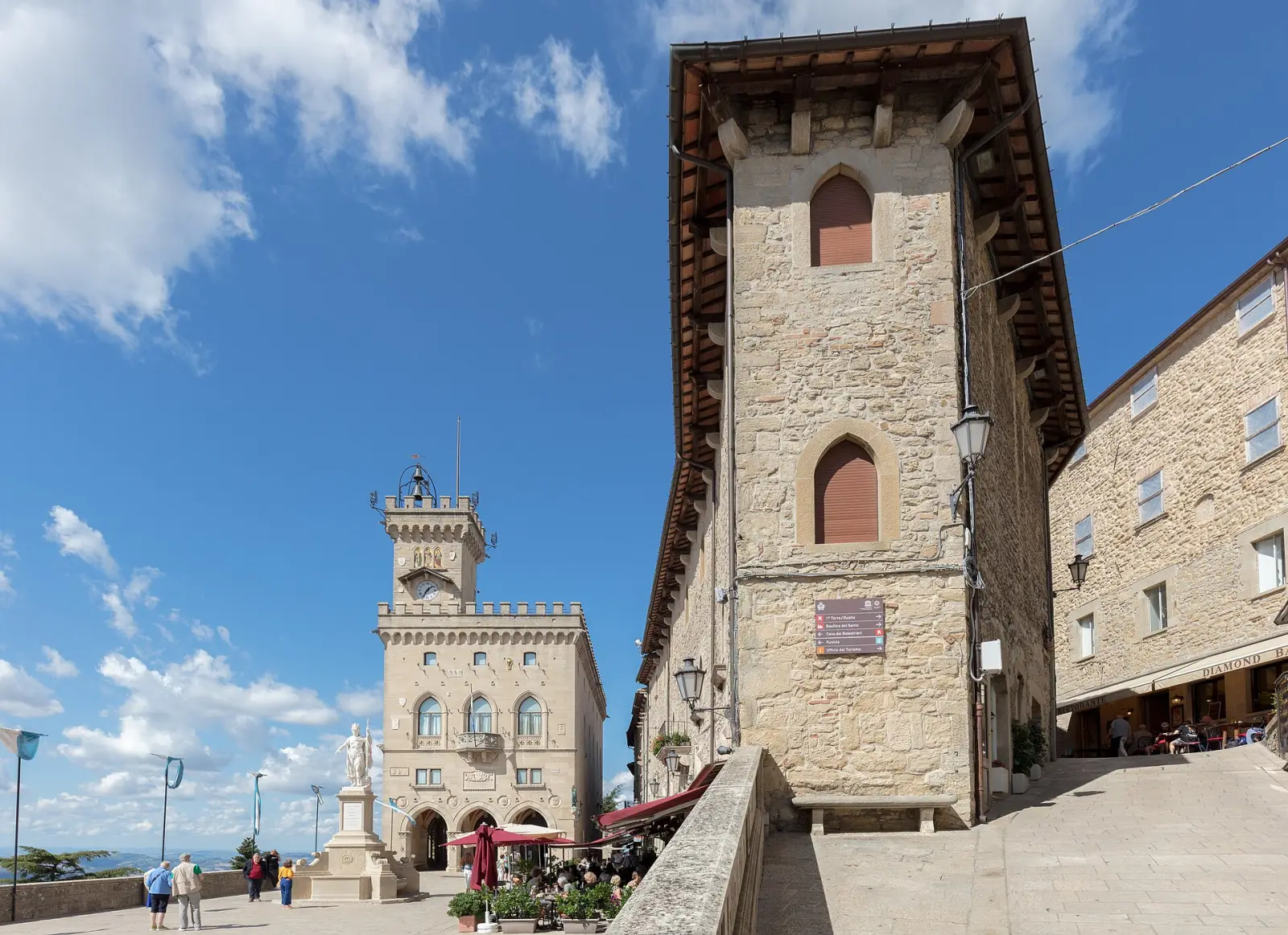
San Marino in pictures


Path to permanent residence · 1
- PR after 5 years · Residence after five years of ordinary stay permit (Art. 16(2) Law 118/2010)
Arriving in San Marino: first steps
- Check which residence route fits your situation before travelling, as most require a proposal or decision by San Marino authorities.
- Arrange health, accident and maternity insurance valid in San Marino if your route requires it.
- Secure adequate housing for the whole stay, as many routes require proof of accommodation.
- Prepare a valid travel document, certified as authentic by the official receiving the application.
- Obtain certificates of residence, criminal record and pending charges, or equivalents, plus any sworn declarations required.
- If you are a non-Schengen worker, make sure you have a Schengen visa other than a tourist visa when the permit is granted.
Questions people ask
What special talent visas does San Marino have?
San Marino has 1 talent scheme. It is Recognised merit residence.
Does San Marino have a working holiday visa?
Yes. San Marino has 1 working holiday visa. Working Holiday gives a first stay of 1 year.
What is the San Marino digital nomad visa income requirement in 2026?
San Marino has 1 nomad or remote-work visa. It is Atypical residence.
How much do you need to invest for residency in San Marino?
San Marino has 5 investor routes. Elective residence · deposit asks for an investment of at least EUR 600,000 (≈ $670,000). Elective residence · property asks for an investment of at least EUR 500,000 (≈ $559,000). There is also Donation residence.
Can I retire or live in San Marino on my savings or pension?
San Marino has 1 retirement or pay-to-stay route. Pensioner residence asks for an income of at least EUR 120,000 a year (≈ $134,000).
Can I move to San Marino by starting a business?
San Marino has 2 business or startup routes. Company owner residence asks for savings of at least EUR 75,000 (≈ $83,800). Entrepreneur permit gives a first stay of 2 years that can be renewed.
What work visas does San Marino offer foreigners?
San Marino has 3 work visas. Seasonal work permit gives a first stay of 1 year that can be renewed. Temporary work permit gives a first stay of 1 year that can be renewed. There is also Key manager residence.
How do I get a student visa for San Marino?
San Marino has 1 student visa. Student permit gives a first stay of 1 year that can be renewed.
Can I join my spouse or partner in San Marino?
Yes. San Marino has 2 spouse visas. Spouse of a resident asks for an income of at least EUR 12,000 a year (≈ $13,400) and gives a first stay of 1 year that can be renewed. There is also Spouse of a citizen.
Compare with
≈ USD figures are approximate: daily reference rates from ExchangeRate-API, dated 12 Oct 2026, refreshed when the site is updated.
Ask the AI about San Marino AI
An AI assistant answers from the published records on this page and cites them. It can't assess your personal eligibility. Don't include personal details.