Moving to Mauritius
17 ways to move to Mauritius in our guide: 1 nomad / remote-work visa, 6 investor routes, 2 pay-to-stay routes, 3 business / startup routes, 1 work visa, 3 routes by nationality or ancestry, 1 spouse visa.
Remote workers: Premium Visa, $1,500+ a month. Smallest investment: Diaspora · Self-employed, MUR 250k+ ≈ $5,260. Tax for newcomers: Mauritius resident individuals: income tax 0% / 10% / 20% / 35%, 35% tax. Checked against official sources on .
Mauritius mixes a tropical lifestyle with a set of residence routes built around property, remote work, retirement and business. The island is small and the rules are specific, so the right route depends on whether you plan to buy a home, keep working for clients abroad, or run something local.
Nomad / Remote work · 1

Premium Visa
Income needed: $1,500+ a month
Investing · 6

Retire or live on savings · 2

Retired non-citizen permit
Income needed: $2,000+ a month
Senior Living residence
Investment needed: $200k+
Business / Startup · 3

Innovator Occupation Permit
First stay: 10 yrs
Investor Occupation Permit
Investment needed: $100k+
Self-employed Occupation Permit
Investment needed: $50k+
Work · 1

Professional Occupation Permit
Income needed: MUR 50k+ a month ≈ $1,050
For your nationality or ancestry · 3

Open only to citizens of certain countries or to people with family roots here. Unlike free movement, each needs an application.
Spouse visas · 1

For people married to, or in a partnership with, a citizen or permanent resident.
Spouse of a citizen
First stay: 2 yrs
Tax
Resident individuals are taxed on Mauritius-source income and on foreign-source income remitted to Mauritius, so money you leave abroad is generally outside the charge. Premium Visa holders are taxed only on what they remit, and spending with foreign cards is not treated as remittance.
Standard rules
Resident individuals: foreign-source income taxed when remitted, ordinary rates 0% / 10% / 20% / 35%
Details
- Limit: MUR 500k/yr ≈ $11k
Resident individuals pay tax on income derived in Mauritius and on foreign-source income received in Mauritius. For the income year starting 1 July 2026 the Finance Act 2026 sets 0 percent on the first MUR 500,000 (≈ $10,500) of chargeable income, 10 percent on the next MUR 500,000, (≈ $10,500) 20 percent on the next MUR 11 million (≈ $232,000) and 35 percent above MUR 12 million (≈ $253,000).
Taxed on
Chargeable income of a resident: Mauritius-source income plus foreign-source income remitted to Mauritius; non-residents are taxed on net Mauritius-source income. Income year 1 July to 30 June. In the income year 1 July 2025 to 30 June 2026 the rates were 0 percent on the first MUR 500,000, (≈ $10,500) 10 percent on the next MUR 500,000 (≈ $10,500) and 20 percent on the remainder; the Mauritius Revenue Authority return page still shows that table.
Who it applies to
- Resident individual: domiciled in Mauritius (unless permanent abode is outside Mauritius), or present 183 days or more in the income year, or 270 days or more in aggregate over the two preceding income years.
Exclusions
- Non-residents get no personal reliefs, deductions or allowances.
- Dividends from Mauritius-resident companies, savings or fixed-deposit interest of individuals, and gains on sale of securities are exempt.
Limits
- MUR 500,000 a year (≈ $10,500) · Chargeable income taxed at 0 percent; the next MUR 500,000 (≈ $10,500) is taxed at 10 percent (Finance Act 2026, First Schedule Part I).
- MUR 12,000,000 a year (≈ $253,000) · From the income year starting 1 July 2026: 20 percent applies on chargeable income between MUR 1,000,000 (≈ $21,000) and MUR 12,000,000, (≈ $253,000) and 35 percent above MUR 12,000,000 (≈ $253,000).
- MUR 500,000 a year (≈ $10,500) · Total net income above which an individual must file a return.
Days in the country
- At least 183 days in Income year (1 July to 30 June) · Present in Mauritius for an aggregate of 183 days or more in the income year makes an individual resident.
- At least 270 days in Aggregate over the two preceding income years · Present for an aggregate of 270 days or more in the two preceding income years (together with presence in the current year) also gives residence.
Tax residence
Foreign-source income is taxable in the hands of the resident, in practice on a remittance basis. Solidarity levy was abolished from 1 July 2023. The Finance Act 2026 band table applies to the income year starting 1 July 2026 and later years (section 28(12)). The same rates are set out in more detail in “Mauritius resident individuals: income tax 0% / 10% / 20% / 35%”.
Visas
Tax residence is tested independently of the permit; occupation-permit, retiree and property-scheme holders who meet the residence test are resident.
Other taxes
Filing: returns are due for those with chargeable income, net income above MUR 500,000, (≈ $10,500) or gross business income above MUR 2 million (≈ $42,100).
Checked against official sources on , some details partly verifiedChange log
Special regime
Premium Visa holders: tax on remitted income only
Tax relief
Details
- On: Money remitted to Mauritius
- Who: Holder of a Premium Visa
Premium Visa holders are taxable in Mauritius only to the extent that money is remitted to Mauritius; spending with foreign cards is not remittance and holders need not register with the MRA unless they owe tax.
Taxed on
Money remitted to Mauritius; Mauritian-sourced income such as emoluments for work performed remotely in Mauritius.
Who it applies to
- Holder of a Premium Visa.
Exclusions
- Money spent in Mauritius with foreign credit or debit cards is not treated as remitted.
- Money deposited in a Mauritian bank account is taxable unless a declaration (form PV1, section 73B(3) Income Tax Act) is made that tax has been paid on it in the country of origin or residence.
Tax residence
Declaration is due by the earlier of departure or 15 October each year.
Visas
Applies only while on the Premium Visa; occupation-permit holders are outside it.
Other taxes
CSG is not applicable to a Premium Visa holder; National Savings Fund and Training Levy contributions are not applicable. A statement certifying stay and tax liability is issued on request at departure. Source FAQ dated October 2022.
Checked against official sources on Change log
Standard rules
Mauritius resident individuals: income tax 0% / 10% / 20% / 35% (income year from 1 July 2026)
35% tax
Details
- Limit: MUR 500k/yr ≈ $11k
For the income year starting 1 July 2026 the Finance Act 2026 sets individual income tax at 0% on the first MUR 500,000, (≈ $10,500) 10% on the next MUR 500,000, (≈ $10,500) 20% on the next MUR 11 million (≈ $232,000) and 35% above MUR 12 million (≈ $253,000). The 15% Fair Share Contribution applied only to the 2025/26 income year; foreign-source income of an individual is taxed when received or dealt with in Mauritius.
Taxed on
Chargeable income of an individual, income year 1 July to 30 June. Bands from the income year commencing 1 July 2026: 0% on the first MUR 500,000 (≈ $10,500); 10% on the next MUR 500,000 (≈ $10,500); 20% on the next MUR 11,000,000 (≈ $232,000); 35% on the remainder (above MUR 12,000,000 (≈ $253,000)). Income year 1 July 2025 to 30 June 2026 (First Schedule Part I as in the May 2026 consolidation): 0% on the first MUR 500,000, (≈ $10,500) 10% on the next MUR 500,000, (≈ $10,500) 20% on the remainder, plus a Fair Share Contribution of 15% of leviable income above MUR 12,000,000 (≈ $253,000) (s16C). Top marginal rate shown as ratePercent.
Who it applies to
- Resident individual: domiciled in Mauritius (unless the permanent place of abode is outside Mauritius), or present 183 days or more in the income year, or present 270 days or more in aggregate across the income year and the 2 preceding income years (Income Tax Act s73(1)(a)).
- Non-residents are taxed on income derived from Mauritius.
- Income derived by an individual from outside Mauritius is deemed derived when it is received in Mauritius by or on behalf of the individual, or dealt with in Mauritius in the individual's interest (s5(3)).
Exclusions
- Finance Act 2026 s7(b) amends s16C(3) by deleting the words 'and for the subsequent 2 income years': the 15% Fair Share Contribution on leviable income above MUR 12,000,000 (≈ $253,000) applies to the income year commencing 1 July 2025 only; from 1 July 2026 the 35% band replaces it for individuals.
- The Finance Act 2026 also adds a four-year income exemption for qualifying non-citizen employees of companies manufacturing solar photovoltaic systems (Second Schedule Part II item 22); it is sector-specific and not a general expatriate relief.
Limits
- MUR 500,000 a year (≈ $10,500) · 0% band: first MUR 500,000 (≈ $10,500) of chargeable income (income years from 1 July 2025).
- MUR 1,000,000 a year (≈ $21,000) · 10% applies between MUR 500,000 (≈ $10,500) and MUR 1,000,000 (≈ $21,000) of chargeable income.
- MUR 12,000,000 a year (≈ $253,000) · From 1 July 2026: 20% applies up to MUR 12,000,000 (≈ $253,000) and 35% above it. For the income year 2025/26 only: Fair Share Contribution threshold, 15% of leviable income above it.
Days in the country
- At least 183 days in income year (1 July - 30 June) · Presence in Mauritius makes an individual resident (s73(1)(a)(ii)).
- At least 270 days in current income year and the 2 preceding income years (aggregate) · Alternative residence test (s73(1)(a)(iii)).
Tax residence
Section 5(3) deems foreign-source income of an individual derived only when received or dealt with in Mauritius, so foreign-source income that is not remitted or dealt with in Mauritius is outside the charge. Finance Act 2026 s7(v) is deemed in force for the income year commencing 1 July 2026 and every later income year (s28(12)).
Visas
Residence permits and visas do not determine tax residence; the day tests and domicile in s73 do. Premium Visa holders have a separate remittance rule (see “Premium Visa holders: tax on remitted income only”).
Other taxes
Contribution Sociale Generalisee and VAT apply separately.
Checked against official sources on Change log
Checked against official sources on Change log
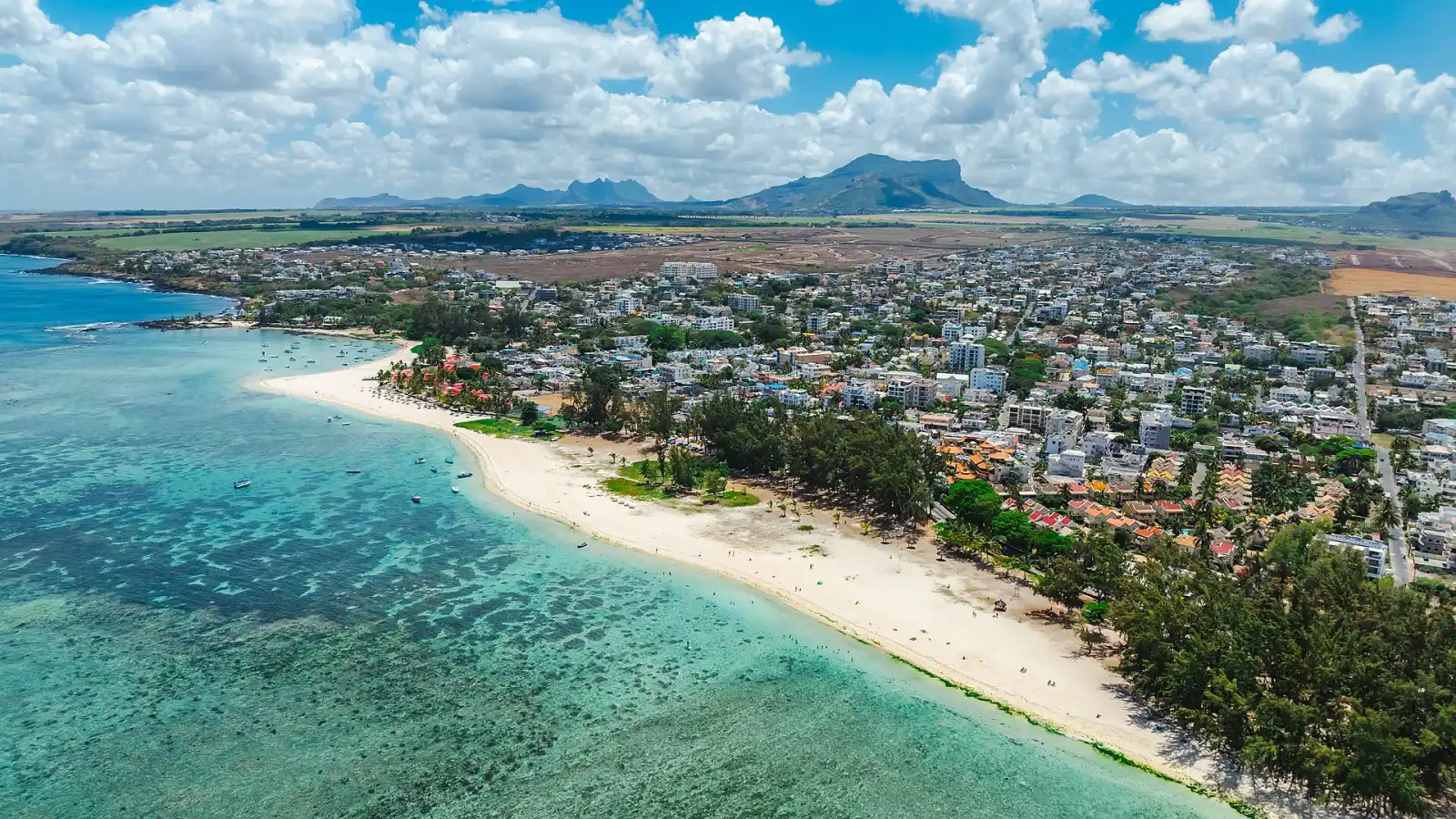
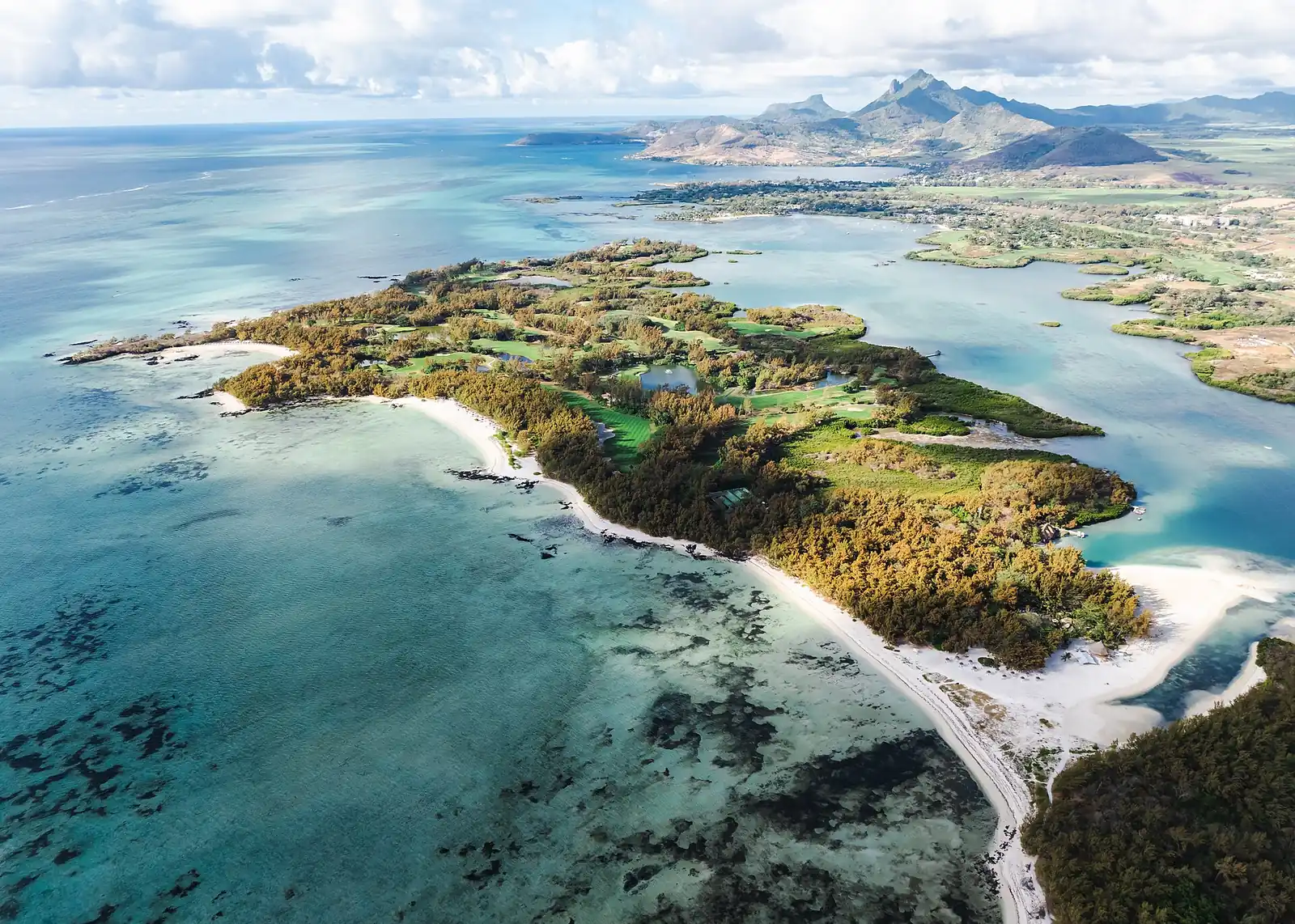
Mauritius in pictures


Shorter stays · 1
Spouse visas
Wedding visa
Income needed: MUR 45k+ a month ≈ $950
Switch to later · 1
Work
Young Professional permit
Income needed: MUR 25k+ a month ≈ $530
Path to permanent residence · 1
- PR after 5 years · Permanent Residence Permit (PRP) for investors, professionals, self-employed and retirees
Arriving in Mauritius: first steps
- Arrange travel and health insurance covering your stay before you arrive, as several routes ask for proof of cover.
- Have an accommodation letter or proof of address ready, whether you rent or buy.
- Keep your return ticket and long-stay plan documents with you for the Premium Visa route.
- Open a local bank account once you have your permit and address, so funds and turnover can be documented.
- Register with the Mauritius Revenue Authority only if you owe tax, and note the declaration deadline if you are on a Premium Visa.
- For business and occupation permits, start the application online through the National Electronic Licensing System rather than travelling first.
Questions people ask
What is the Mauritius digital nomad visa income requirement in 2026?
Mauritius has 1 nomad or remote-work visa. Premium Visa asks for an income of at least $1,500 a month and gives a first stay of 1 year that can be renewed.
How much do you need to invest for residency in Mauritius?
Mauritius has 6 investor routes. PDS · $375k asks for an investment of at least $375,000. G+2 apartment · $375k asks for an investment of at least $375,000. IRS · $375k asks for an investment of at least $375,000.
Can I retire or live in Mauritius on my savings or pension?
Mauritius has 2 retirement or pay-to-stay routes. Retired non-citizen permit asks for an income of at least $2,000 a month and gives a first stay of 10 years that can be renewed. Senior Living residence asks for an investment of at least $200,000.
Can I move to Mauritius by starting a business?
Mauritius has 3 business or startup routes. Innovator Occupation Permit gives a first stay of 10 years that can be renewed. Investor Occupation Permit asks for an investment of at least $100,000 and gives a first stay of 10 years that can be renewed. Self-employed Occupation Permit asks for an investment of at least $50,000 and gives a first stay of 10 years that can be renewed.
What work visas does Mauritius offer foreigners?
Mauritius has 1 work visa. Professional Occupation Permit asks for a salary of at least MUR 50,000 a month (≈ $1,050) and gives a first stay of 10 years that can be renewed.
Can my nationality or ancestry give me residence in Mauritius?
Yes. Mauritius has 3 routes by nationality or ancestry. Diaspora · Professional asks for an income of at least MUR 100,000 a month (≈ $2,100). Diaspora · Self-employed asks for an investment of at least MUR 250,000 (≈ $5,260). There is also Diaspora · Young professional.
Can I join my spouse or partner in Mauritius?
Yes. Mauritius has 1 spouse visa. Spouse of a citizen gives a first stay of 2 years.
Compare with
≈ USD figures are approximate: daily reference rates from ExchangeRate-API, dated 12 Oct 2026, refreshed when the site is updated.
Ask the AI about Mauritius AI
An AI assistant answers from the published records on this page and cites them. It can't assess your personal eligibility. Don't include personal details.