
Moving to India
11 ways to move to India in our guide: 1 investor route, 5 work visas, 2 student visas, 1 route by nationality or ancestry, 2 spouse visas.
No digital nomad visa. Smallest investment: PRS · Foreign investor, from ₹100M ≈ $1M. Tax for newcomers: Not ordinarily resident (RNOR) status: foreign-source income largely outside tax, RNOR relief. Checked against official sources on .
India offers a range of visa routes for foreign investors, business visitors, workers and students. The investor routes are tied to specific investment and employment commitments, while business and employment visas serve shorter or employer-linked purposes.
Investing · 1

PRS · Foreign investor
Investment needed: from ₹100M ≈ $1M
Work · 5

Student · 2

e-Student visa
First stay: 1 yr
Student visa (S-1)
First stay: 5 yrs
For your nationality or ancestry · 1

Open only to citizens of certain countries or to people with family roots here. Unlike free movement, each needs an application.
OCI card by descent
Spouse visas · 2

For people married to, or in a partnership with, a citizen or permanent resident.
Spouse of a citizen
First stay: 5 yrs
OCI card for a citizen’s spouse
Free movement and visa-free stays · 2
Free movement by treaty · Lets you live here
Open to 1 passport: Nepal.
Free movement by treaty · Lets you live here
Open to 1 passport: Bhutan.
Tax
Tax rules for newcomers are separate from visa and residency status.
Special regime
Not ordinarily resident (RNOR) status: foreign-source income largely outside tax
Tax relief
Details
- On: Income received or accruing in India
- Limit: ₹1.5M/yr ≈ $16k
A resident individual who is 'not ordinarily resident' in India is taxed on income received or accruing in India, and on foreign-source income only when it comes from a business controlled in or a profession set up in India.
Taxed on
Income received or accruing in India, plus foreign-source income derived from a business controlled in India or a profession set up in India.
Who it applies to
- Resident in India for the tax year but non-resident in nine of the ten preceding years, or present in India 729 days or less in the seven preceding years.
- Indian citizens or persons of Indian origin who visit India for 120 to 181 days with Indian-source income above INR 15 lakh (≈ $15,600) are treated as not ordinarily resident.
- Indian citizens deemed resident because Indian income exceeds INR 15 lakh (≈ $15,600) and they are liable to tax nowhere else are treated as not ordinarily resident.
- From tax years beginning on or after 1 April 2026 the rule is section 6(13) and section 5 of the Income-tax Act 2025; the criteria match the 1961 Act.
Exclusions
- Ordinarily resident individuals (more than 729 days in the preceding seven years and resident in at least two of the preceding ten years) are taxed on worldwide income.
Limits
- INR 1,500,000 a year (≈ $15,600) · Indian-source income (other than foreign-source) above which a citizen not taxed elsewhere is deemed resident, as RNOR
Days in the country
- More than 729 days in preceding seven tax years · Presence above 729 days (together with residence in two of the ten preceding years) makes an individual ordinarily resident; 729 days or less gives RNOR status
Tax residence
RNOR status is annual and tests look back to years governed by the 1961 Act.
Visas
Visa type is irrelevant; status depends on days of presence and past residence.
Other taxes
Goods and services tax, surcharge and cess apply separately.
Checked against official sources on Change log
Standard rules
India: residence tests and worldwide taxation of residents
Worldwide income
Details
- Limit: ₹1.5M/yr ≈ $16k
An individual is resident in India with 182 days or more in the tax year, or 60 days or more in the year plus 365 days or more in the preceding four years; residents are taxed on worldwide income unless not ordinarily resident, non-residents on Indian-source income.
Taxed on
Worldwide income for ordinarily resident individuals; Indian-source income for non-residents.
Who it applies to
- Tax years beginning on or after 1 April 2026 fall under section 6 of the Income-tax Act 2025; earlier years stay under the Income-tax Act 1961.
- Citizens leaving for employment abroad and visiting citizens or persons of Indian origin are resident only with 182 days or more; the 60-day test becomes 120 days for those with Indian income above INR 15 lakh (≈ $15,600).
Exclusions
- Citizens with Indian income above INR 15 lakh (≈ $15,600) who are liable to tax in no other country are deemed resident regardless of days (treated as RNOR).
Limits
- INR 1,500,000 a year (≈ $15,600) · Indian income (other than from foreign sources) above which the 120-day test and deemed residence apply to citizens
Days in the country
- At least 182 days in tax year (1 April to 31 March) · Resident in India
- At least 60 days in tax year, together with 365 days or more in the preceding four tax years · Alternative resident test
- At least 120 days in tax year, together with 365 days or more in the preceding four tax years · Alternative test for citizens or persons of Indian origin with Indian income above INR 15 lakh (≈ $15,600)
Tax residence
Residential status is determined year by year; days in FY 2025-26 and earlier still count toward the look-back tests.
Visas
Tax residence is independent of visa or OCI status.
Other taxes
Surcharge, cess and goods and services tax apply separately.
Checked against official sources on Change log
Standard rules
India individual income tax rates, new regime (Income-tax Act 2025 section 202, as amended by Finance Act 2026)
Details
- Limit: ₹400k/yr ≈ $4,170
Individuals pay income tax under the new regime of 0% up to INR 4 lakh (≈ $4,170), then 5% to 30% in INR 4 lakh (≈ $4,170) steps, with 30% above INR 24 lakh (≈ $25,000), unless they opt out.
Taxed on
Total income of the tax year of an individual, from tax years beginning on or after 1 April 2026.
Who it applies to
- Default regime for individuals, HUFs, associations of persons and bodies of individuals; an option to opt out is available.
Exclusions
- Surcharge, cess and the old-regime exemptions are outside this table.
Limits
- INR 400,000 a year (≈ $4,170) · Nil up to INR 400,000 (≈ $4,170)
- INR 800,000 a year (≈ $8,340) · 5% from INR 400,001 (≈ $4,170) to 800,000
- INR 1,200,000 a year (≈ $12,500) · 10% from INR 800,001 (≈ $8,340) to 1,200,000
- INR 1,600,000 a year (≈ $16,700) · 15% from INR 1,200,001 (≈ $12,500) to 1,600,000
- INR 2,000,000 a year (≈ $20,900) · 20% from INR 1,600,001 (≈ $16,700) to 2,000,000
- INR 2,400,000 a year (≈ $25,000) · 25% from INR 2,000,001 (≈ $20,900) to 2,400,000; 30% above INR 2,400,000 (≈ $25,000)
Tax residence
Applies to residents on worldwide income and to non-residents on Indian-source income.
Visas
Rates are the same for every visa type.
Other taxes
Surcharge, cess and GST apply separately.
Checked against official sources on Change log
Checked against official sources on Change log
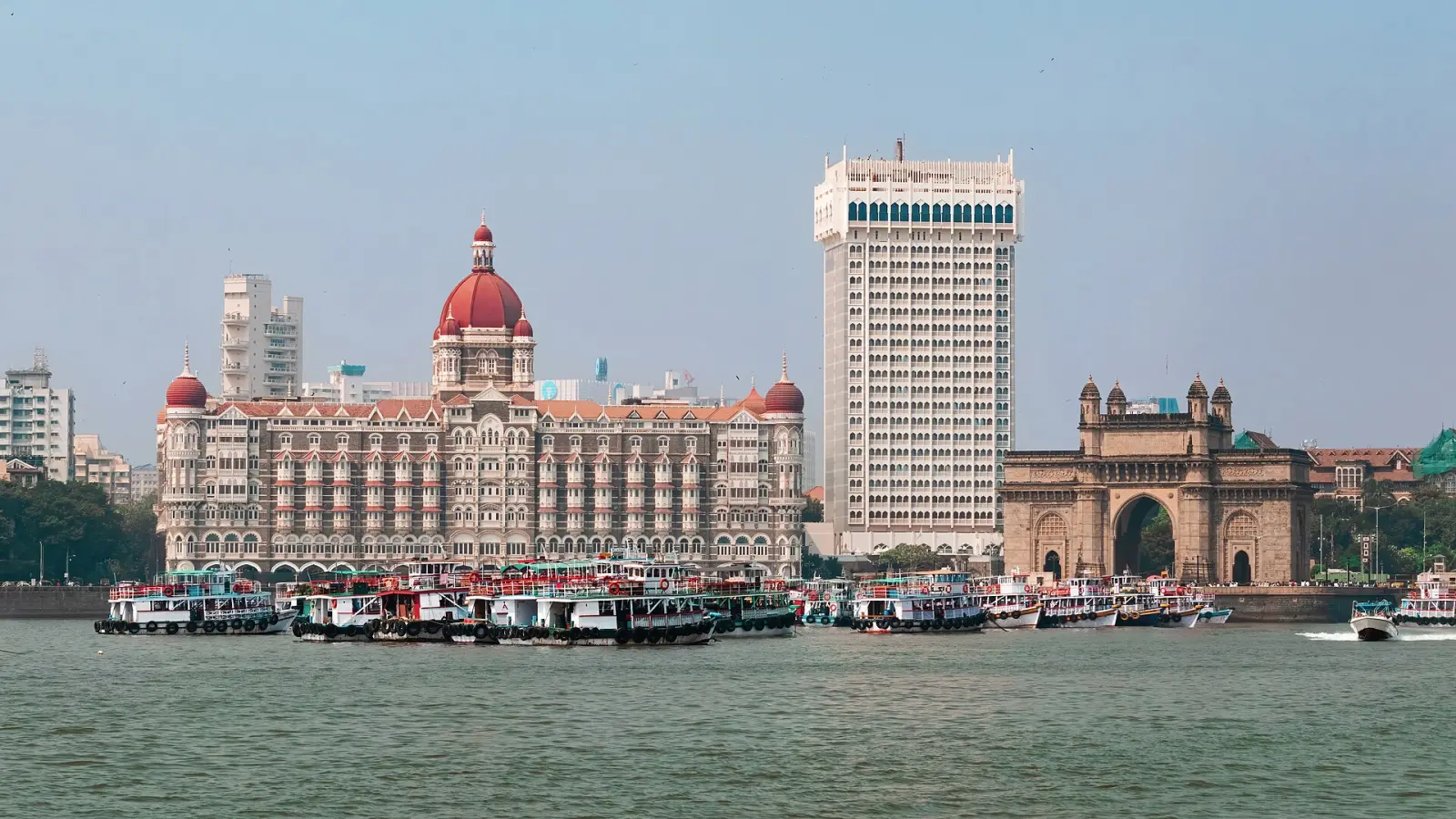
India in pictures



Path to permanent residence · 1
- PR after 10 years · Permanent Residency Status (PRS) for Foreign Investors
Arriving in India: first steps
- Arrange health cover as required for your visa category and personal circumstances.
- Keep proof of your Indian address and any investment or employment evidence ready for official requests.
- For investor routes, maintain annual FDI and employment records as directed by the authorities.
- For dependants, confirm study and any private-sector employment permissions with the FRRO or FRO.
Questions people ask
How much do you need to invest for residency in India?
India has 1 investor route. PRS · Foreign investor asks for an investment from INR 100,000,000 (≈ $1,040,000) and gives a first stay of 1.5 years that can be renewed.
What work visas does India offer foreigners?
India has 5 work visas. Employment visa (E-1) asks for a salary of at least INR 1,625,000 a year (≈ $16,900) and gives a first stay of 2 years that can be renewed. Consultant visa (E-1) asks for a salary of at least INR 1,625,000 a year (≈ $16,900) and gives a first stay of 2 years that can be renewed. NGO employment (E-2) gives a first stay of 1 year that can be renewed.
How do I get a student visa for India?
India has 2 student visas. e-Student visa gives a first stay of 1 year. Student visa (S-1) gives a first stay of 5 years that can be renewed.
Can my nationality or ancestry give me residence in India?
Yes. India has 1 route by nationality or ancestry. It is OCI card by descent.
Can I join my spouse or partner in India?
Yes. India has 2 spouse visas. Spouse of a citizen gives a first stay of 5 years that can be renewed. There is also OCI card for a citizen’s spouse.
Does India have a special tax regime for new residents?
Yes: Not ordinarily resident (RNOR) status: foreign-source income largely outside tax. A resident individual who is 'not ordinarily resident' in India is taxed on income received or accruing in India, and on foreign-source income only when it comes from a business controlled in or a profession set up in India. It is separate from the visa and has its own conditions.
Compare with
≈ USD figures are approximate: daily reference rates from ExchangeRate-API, dated 12 Oct 2026, refreshed when the site is updated.
Ask the AI about India AI
An AI assistant answers from the published records on this page and cites them. It can't assess your personal eligibility. Don't include personal details.