Moving to Cambodia
5 ways to move to Cambodia in our guide: 1 investor route, 1 pay-to-stay route, 1 work visa, 1 student visa, 1 route by nationality or ancestry.
No digital nomad visa. Smallest investment: Investor stay (QIP), $5M+. Checked against official sources on .
Cambodia is a straightforward place to settle if you are retired, investing, working or studying, with extensions of stay handled inside the country rather than at an embassy. The main routes build on entering first on an ordinary visa and then converting to the status that matches your situation.
Investing · 1

Investor stay (QIP)
Investment needed: $5M+
Retire or live on savings · 1

Retirement extension (ER)
First stay: 1 yr
Work · 1

Business/work extension (EB)
First stay: 1 yr
Student · 1

Student extension (ES)
First stay: 1 yr
For your nationality or ancestry · 1

Open only to citizens of certain countries or to people with family roots here. Unlike free movement, each needs an application.
Tax
Employees who are resident pay salary tax on a progressive monthly scale, while non-residents face a flat withheld rate, and fringe benefits are taxed separately. The records do not state the residence test, so treat your own status as something to confirm. The investment project exemption applies to the registered project's profit, not to the investor personally, and the records do not describe how foreign-source income is treated for individuals.
Standard rules
Salary tax for employees: resident brackets and non-resident flat rate
Progressive rates
Details
- On: Monthly taxable salary (in KHR)
- Who: Resident employees: brackets 0% up to KHR 1,500,000 (≈ $370)
- Limit: KHR 1.5M/mo ≈ $370
Resident employees pay progressive monthly salary tax from 0% to 20% on Cambodian-source and foreign-source salary; non-residents pay a flat 20% withheld by the employer on Cambodian-source salary.
Taxed on
Monthly taxable salary (in KHR); fringe benefits taxed at 20% of their total value.
Who it applies to
- Resident employees: brackets 0% up to KHR 1,500,000 (≈ $370); 5% to 2,000,000; 10% to 8,500,000; 15% to 12,500,000; 20% above.
- An individual is a resident for salary tax if resident or with a principal place of abode in Cambodia, or present in Cambodia more than 182 days in any 12-month period ending in the tax year.
Exclusions
- Non-residents pay 20% flat on all taxable salary payments.
Limits
- KHR 1,500,000 a month (≈ $370) · Upper limit of the 0% bracket.
- KHR 2,000,000 a month (≈ $490) · Upper limit of the 5% bracket (excess amount KHR 75,000 (≈ $19)).
- KHR 8,500,000 a month (≈ $2,100) · Upper limit of the 10% bracket (excess KHR 175,000 (≈ $43)).
- KHR 12,500,000 a month (≈ $3,080) · Upper limit of the 15% bracket (excess KHR 600,000 (≈ $150)); 20% above (excess KHR 1,225,000 (≈ $300)).
Days in the country
- More than 182 days in any 12-month period ending in the tax year · Presence in Cambodia that makes an individual resident for salary tax (Law on Taxation, Article 42).
Tax residence
Residents are liable to salary tax on Cambodian-source and foreign-source salary; non-residents are liable on Cambodian-source salary only. Salary for work performed in Cambodia is Cambodian-source.
Visas
No visa-linked tax relief.
Other taxes
Employers withhold the salary tax; VAT is 10% on supplies by local businesses.
Checked against official sources on Change log
Special regime
Qualified Investment Project income tax exemption
Tax relief
Details
- On: Profit of the registered project (income tax on the enterprise)
Registered Qualified Investment Projects can choose either an income tax exemption of 3 to 9 years from first income, followed by 25%, 50% and 75% of the tax due for two years each, or special depreciation with deductions of up to 200% of specific expenses for up to 9 years. 2
Taxed on
Profit of the registered project (income tax on the enterprise); not personal income.
Who it applies to
- Investment project registered as a Qualified Investment Project with the Council for the Development of Cambodia or a Municipal-Provincial Investment Sub-Committee under the 2021 Law on Investment.
Exclusions
- Incentives are limited to income taxes and customs duties and related taxes; investors cannot own land, which is reserved for Cambodian nationals.
Tax residence
Applies to the project entity, not to the investor as an individual.
Visas
Registration as a QIP also supports the investor stay permit; the tax exemption is separate from the visa.
Other taxes
Salary tax and withholding taxes still apply to individuals; export and domestically oriented QIPs get customs duty, special tax and VAT exemptions on listed imports.
Checked against official sources on Change log
Standard rules
Cambodia: residents taxed on foreign-source income; non-residents on Cambodian source only
Details
A person present in Cambodia more than 182 days in a calendar year, or domiciled or with a principal place of abode there, is a resident taxpayer liable on Cambodian-source and foreign-source income; non-residents are liable on Cambodian-source income only.
Taxed on
Income from Cambodian sources (services performed in Cambodia, Cambodian property, interest and dividends from resident payers, royalties and similar) and, for residents, all other income treated as foreign-source.
Who it applies to
- Resident taxpayer for tax on profits: domiciled or with a principal place of abode in Cambodia, or present more than 182 days during the calendar year.
- A resident who paid tax on foreign-source income abroad can claim a foreign tax credit under Article 36.
Exclusions
- A non-resident is taxed only on income from Cambodian sources.
Days in the country
- More than 182 days in calendar year · Presence in Cambodia that makes an individual a resident taxpayer for tax on profits (Law on Taxation, Article 3).
Tax residence
Residence is defined by domicile, principal place of abode or more than 182 days of presence in the calendar year.
Visas
Tax residence follows days of presence and abode, not the visa or extension category.
Other taxes
VAT is 10% on supplies by local businesses; salary tax is covered in the salary tax record.
Checked against official sources on Change log
Checked against official sources on Change log
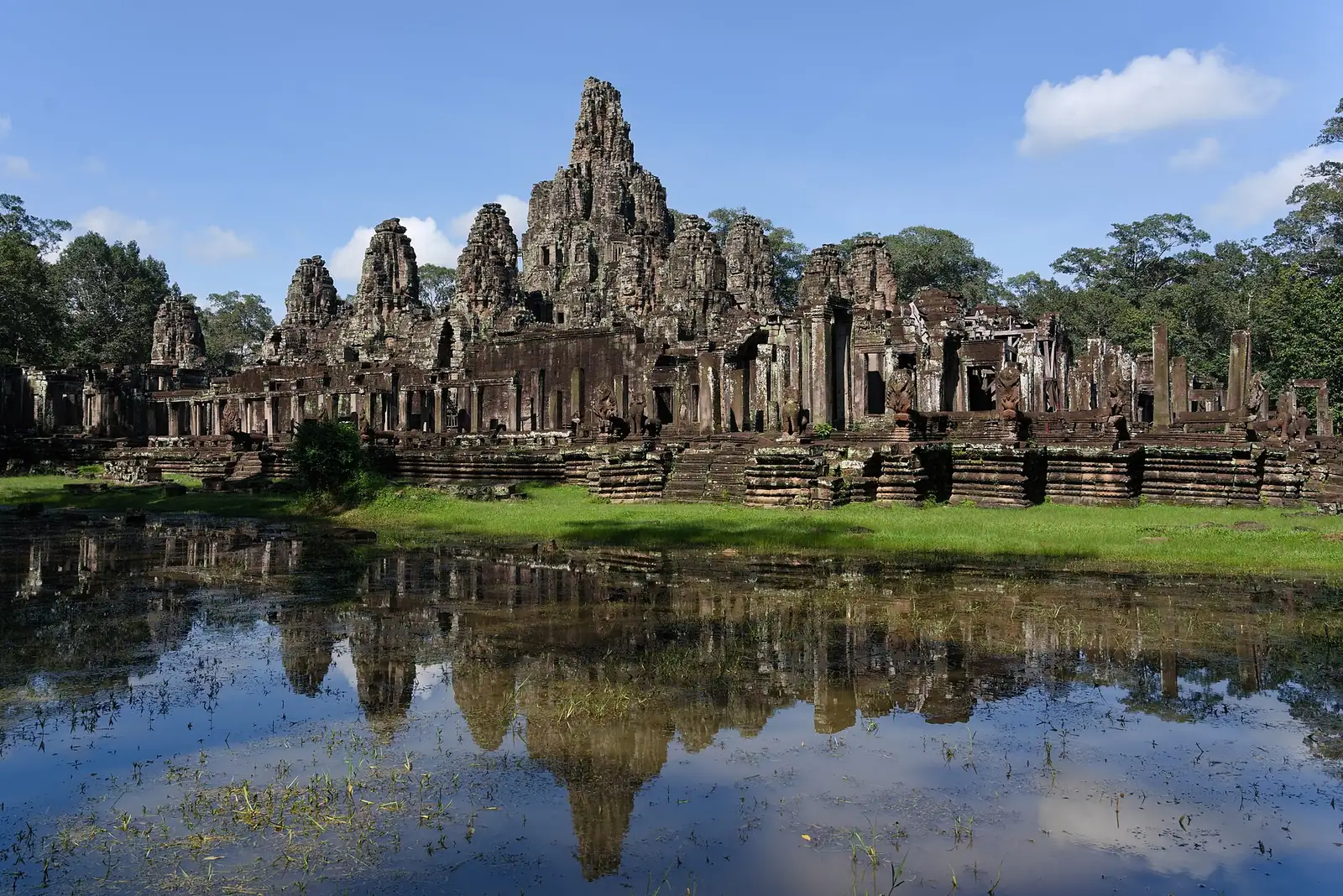
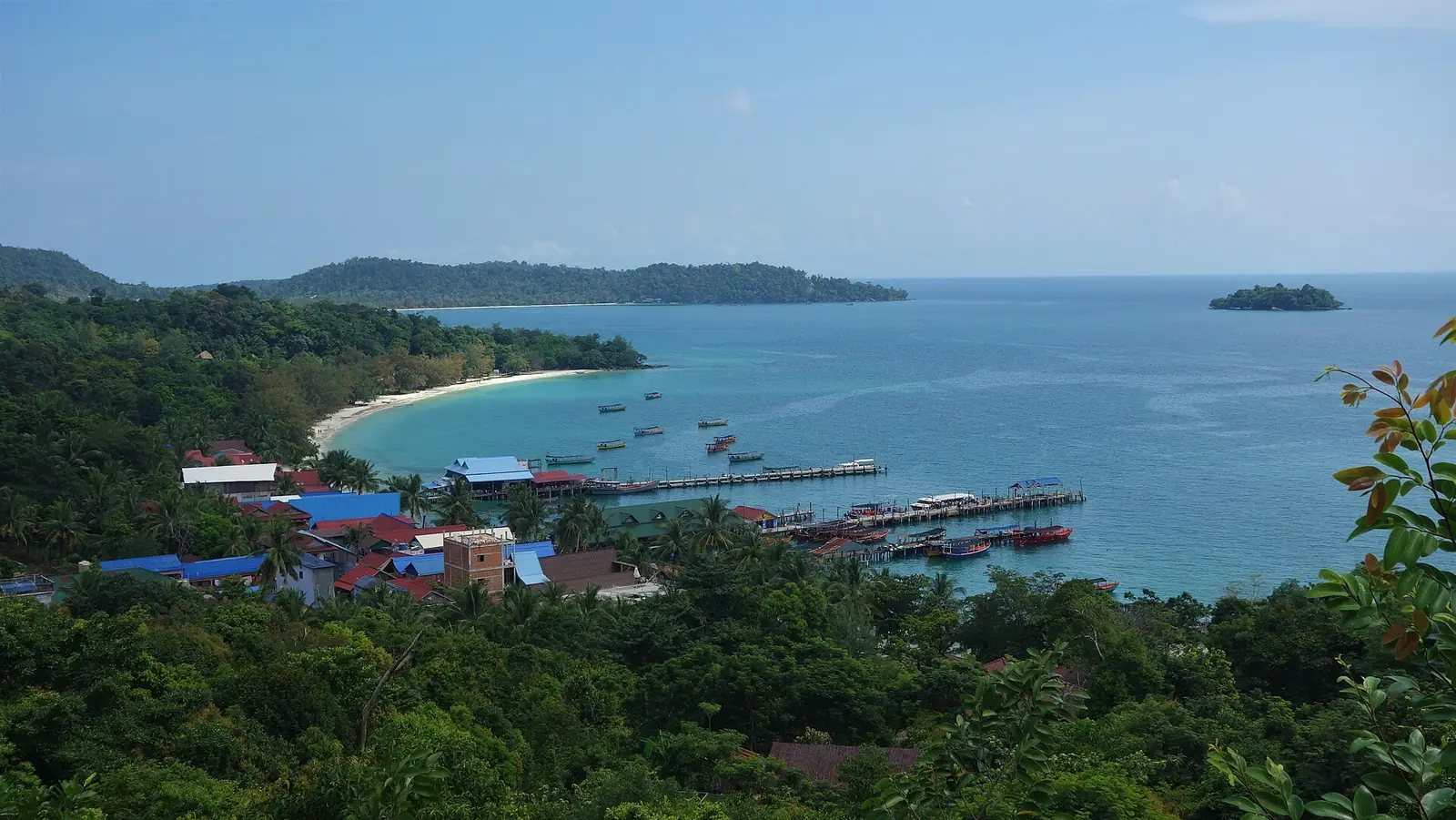
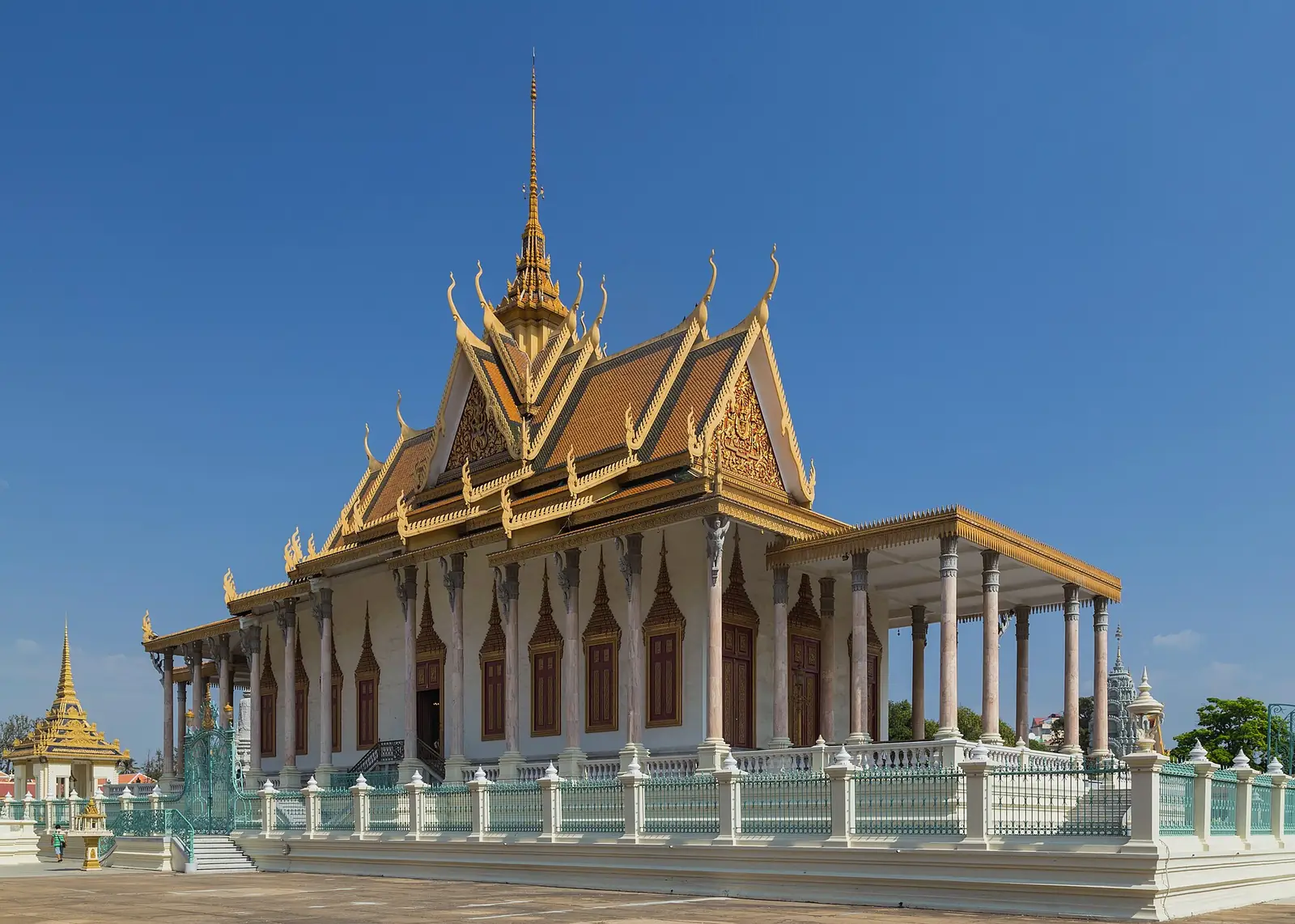
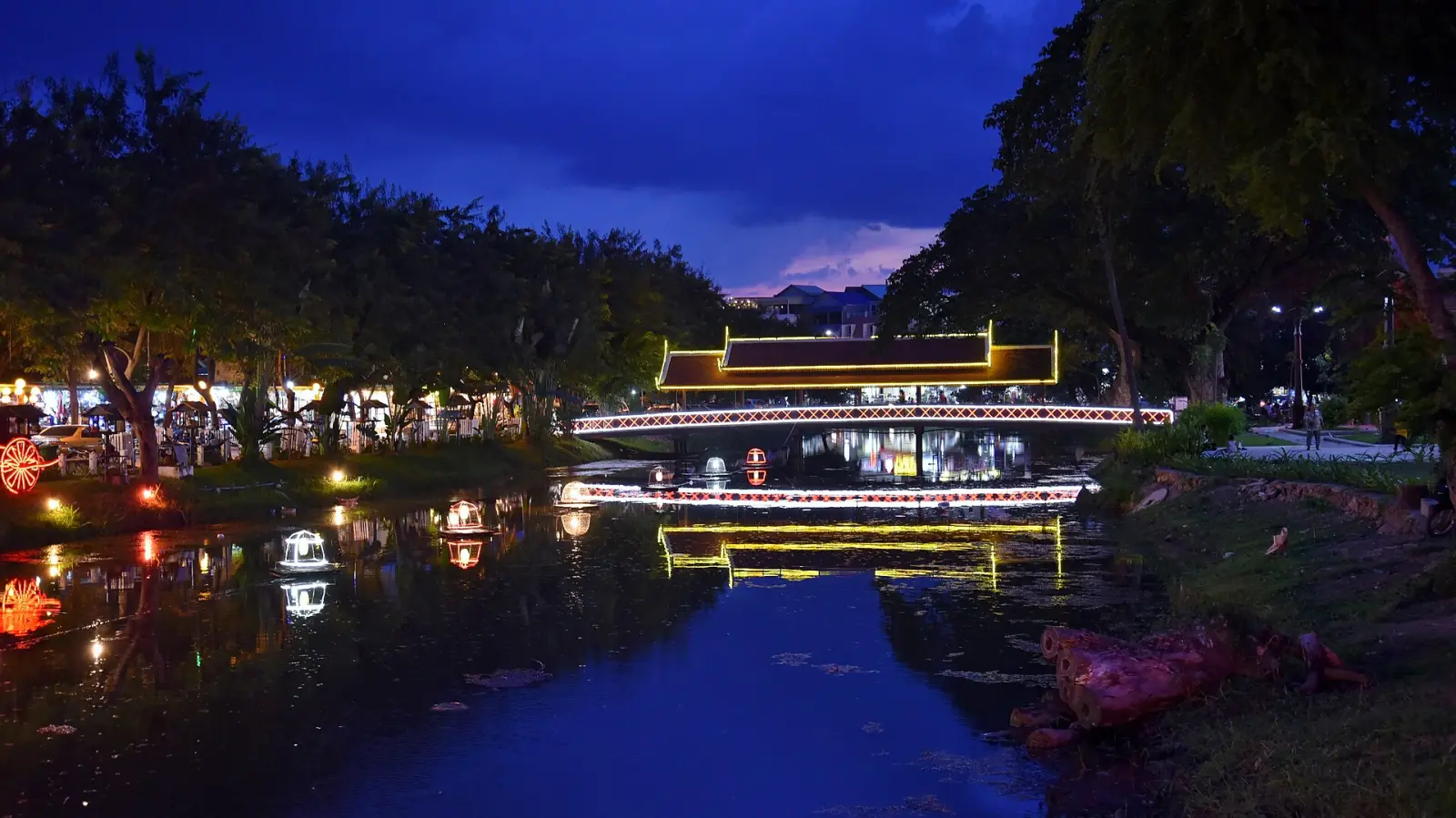
Cambodia in pictures
Shorter stays · 1
Work
Job-seeker extension (EG)
First stay: 6 mo
Details
EG extension of stay (job-seeker extension of E-class ordinary status)
- Work: Limited
- The extension is for people looking for work in Cambodia
- Enter on Visa E
In-country extension of Visa E for people looking for work in Cambodia. 1
Requirements
- The extension is for people looking for work in Cambodia. 1
- Enter on Visa E. 1
- Visa E allows a 30-day stay, which can be extended after entry at the Cambodian immigration department. 2
- Then apply in Cambodia at the immigration office or through an agent for the EG extension. 1
- EG extensions are available for 1, 3 or 6 months and are generally single entry. 1
- Employment in Cambodia requires a work permit and a foreign employment card. 2
Stay
- Extension options of 1, 3 or 6 months, generally single entry.
- First stay: 1 to 6 months, decided case by case.
Work
Job search only; employment needs a work permit and foreign employment card.
Checked against official sources on Change log
Arriving in Cambodia: first steps
- Enter Cambodia on an ordinary visa so you can apply for an extension of stay inside the country.
- Arrange health cover if your route calls for it; the retirement route does not require it.
- Keep proof of your status ready, such as a pension statement, employment letter, business registration or school enrolment letter.
- For dependants, prepare documents showing your relationship to the main applicant.
- If you will work, obtain a work permit and foreign employment card from the labour ministry.
- Investors should register the project as a Qualified Investment Project before relying on the investor stay.
Questions people ask
How much do you need to invest for residency in Cambodia?
Cambodia has 1 investor route. Investor stay (QIP) asks for an investment of at least $5,000,000.
Can I retire or live in Cambodia on my savings or pension?
Cambodia has 1 retirement or pay-to-stay route. Retirement extension (ER) gives a first stay of 1 year that can be renewed.
What work visas does Cambodia offer foreigners?
Cambodia has 1 work visa. Business/work extension (EB) gives a first stay of 1 year that can be renewed.
How do I get a student visa for Cambodia?
Cambodia has 1 student visa. Student extension (ES) gives a first stay of 1 year that can be renewed.
Can my nationality or ancestry give me residence in Cambodia?
Yes. Cambodia has 1 route by nationality or ancestry. It is K visa (Khmer origin).
Compare with
≈ USD figures are approximate: daily reference rates from ExchangeRate-API, dated 12 Oct 2026, refreshed when the site is updated.
Ask the AI about Cambodia AI
An AI assistant answers from the published records on this page and cites them. It can't assess your personal eligibility. Don't include personal details.
Sources (2)
Official sources
- The Cambodia Retirement Visa (ER) and E-class extensions of stay · Ministry of Foreign Affairs and International Cooperation (Royal Embassy of Cambodia in Berlin) · checked 2026-10-12
- Handbook on Investing in Cambodia (July 2023) · Council for the Development of Cambodia (with Australian DFAT) · checked 2026-10-10 · published 2023-07