Moving to Fiji
10 ways to move to Fiji in our guide: 1 investor route, 1 pay-to-stay route, 5 work visas, 1 student visa, 2 spouse visas.
No digital nomad visa. Smallest investment: Assured income residence, FJD 100k+ ≈ $45k. Checked against official sources on .
Fiji offers a handful of residence pathways for people who want to live here without local citizenship: an investor permit for those putting money into a registered business, an assured-income permit for older residents living on overseas pensions or assets, and a range of work permits tied to a local employer or project. There are also student permits and family permits for spouses and dependent children of permit holders or citizens.
Investing · 1

Investor permit
Investment needed: FJD 300k+ ≈ $133k
Retire or live on savings · 1

Assured income residence
Investment needed: FJD 100k+ ≈ $45k
Work · 5

Student · 1

Student permit
First stay: 3 yrs
Spouse visas · 2

For people married to, or in a partnership with, a citizen or permanent resident.
Spouse of a permit holder
Spouse of a citizen
First stay: 1 yr
Free movement and visa-free stays · 1
Visa-free stay (4 months) · Up to 4 months as a visitor
Work not allowed
Open to 112 passports: Antigua and Barbuda, Argentina, Australia, Austria, Bangladesh, Barbados, Belgium, Belize, BM, Botswana, Brazil, Brunei Darussalam, Bulgaria, Canada, Chile, China, Colombia, Croatia, Cuba, Cyprus, Czechia, Denmark, Dominica, Estonia, eSwatini, Finland, FM, France, Gambia, Georgia, Germany, Ghana, Greece, Grenada, Guyana, Hong Kong, Hungary, Iceland, India, Indonesia, Ireland, Israel, Italy, Jamaica, Japan, Kenya, KI, Latvia, Lesotho, Liechtenstein, Lithuania, Luxembourg, Malawi, Malaysia, Maldives, Malta, Mauritius, Mexico, MH, MO, Moldova, Monaco, Netherlands, New Zealand, Nigeria, Norway, NR, Papua New Guinea, Paraguay, Peru, Philippines, Poland, Portugal, PW, Romania, Russia, Saint Kitts and Nevis, Saint Lucia, Serbia, Seychelles, Sierra Leone, Singapore, Slovakia, Slovenia, Solomon Islands, South Africa, South Korea, Spain, Sweden, Switzerland, Taiwan, Thailand, The Bahamas, TO, Trinidad and Tobago, Tunisia, Türkiye, TV, Uganda, Ukraine, United Arab Emirates, United Kingdom, United Republic of Tanzania, United States, Uruguay, VA, Vanuatu, VC, Venezuela, WS, Zambia, Zimbabwe.
Tax
Fiji taxes residents on a progressive scale, while non-residents are taxed from the first dollar and are liable on personal services performed in Fiji and other Fiji-source income. Residency for tax purposes turns on being in Fiji for the threshold number of days or having a usual place of abode here; someone resident only for employment under a short contract is treated as a temporary resident.
Standard rules
Personal income tax for residents: progressive 0% to 39%
Progressive rates
Details
- Limit: FJD 30k/yr ≈ $13k
Resident individuals pay income tax on income from sources in and outside Fiji (foreign-source income), on a progressive scale from nil up to FJD 30,000 (≈ $13,300) to 39% above FJD 1,000,000, (≈ $445,000) with a foreign tax credit for tax paid abroad; a temporary resident (employed under a contract of up to three years) is exempt on foreign-source income other than employment income; non-residents pay on Fiji-source income from the first dollar.
Taxed on
Chargeable income of individuals. A resident's gross income includes income derived from all sources within and outside Fiji (Income Tax Act 2015, s. 14(3)(a)); a non-resident's gross income includes only income derived from sources in Fiji. Employment income is Fiji-source to the extent it relates to employment exercised in Fiji.
Who it applies to
- Resident rates apply from the 2024 tax year onwards: nil to FJD 30,000, (≈ $13,300) 18% to FJD 50,000, (≈ $22,200) 20% to FJD 270,000, (≈ $120,000) then 33% to 39% in bands up to FJD 1,000,000 (≈ $445,000) and above.
- Employers withhold PAYE from salaries; most employees file no return.
- A resident who pays foreign-source income tax on taxable foreign-source income receives a foreign tax credit (s. 60) equal to the lesser of the foreign tax paid and the Fiji tax payable on that income.
- Temporary resident: a resident individual solely or mainly engaged in employment in Fiji under a contract of not more than 3 years, not a Fiji citizen or permanent resident; the foreign-source income of a temporary resident, other than employment income, is exempt income (Income Tax (Exempt Income) Regulations 2016, Schedule, Part 3).
Exclusions
- A person is non-resident if the permanent place of abode is outside Fiji and the person is in Fiji for less than 183 days without intending to make Fiji their usual place of abode.
- Non-resident rates start at 20% on income from the first dollar.
Limits
- FJD 30,000 a year (≈ $13,300) · Chargeable income up to which resident tax is nil
- FJD 50,000 a year (≈ $22,200) · Top of the 18% band for residents
- FJD 270,000 a year (≈ $120,000) · Top of the 20% band; 33% applies from FJD 270,001 (≈ $120,000) to 300,000
- FJD 1,000,000 a year (≈ $445,000) · Above this, the resident rate is 39% on the excess
Days in the country
- At least 183 days in tax year · A person present in Fiji for 183 days or more is not a non-resident for PAYE purposes.
- At least 183 days in any 12-month period · An individual present in Fiji for 183 days, or periods adding up to 183 days, in any 12-month period is a resident individual (Income Tax Act 2015, s. 6(1)(c)); an individual who resides in Fiji or is domiciled there without a permanent place of abode abroad is also resident.
Tax residence
An individual is resident if resident in Fiji, domiciled in Fiji unless having a permanent place of abode abroad, present 183 days in any 12-month period, or a Government employee posted abroad (s. 6); a person who becomes resident is treated as resident from the first day present in Fiji. A person in Fiji for 183 days or more is not a non-resident for PAYE purposes. A tax treaty can allocate taxing rights where the person is resident in both countries.
Visas
A work permit is required to be employed in Fiji; tax residence follows presence and abode rather than the permit.
Other taxes
VAT is 12.5% from 1 August 2025; capital gains tax is 10%; a 1% telecommunications levy applies.
Checked against official sources on Change log
Checked against official sources on Change log
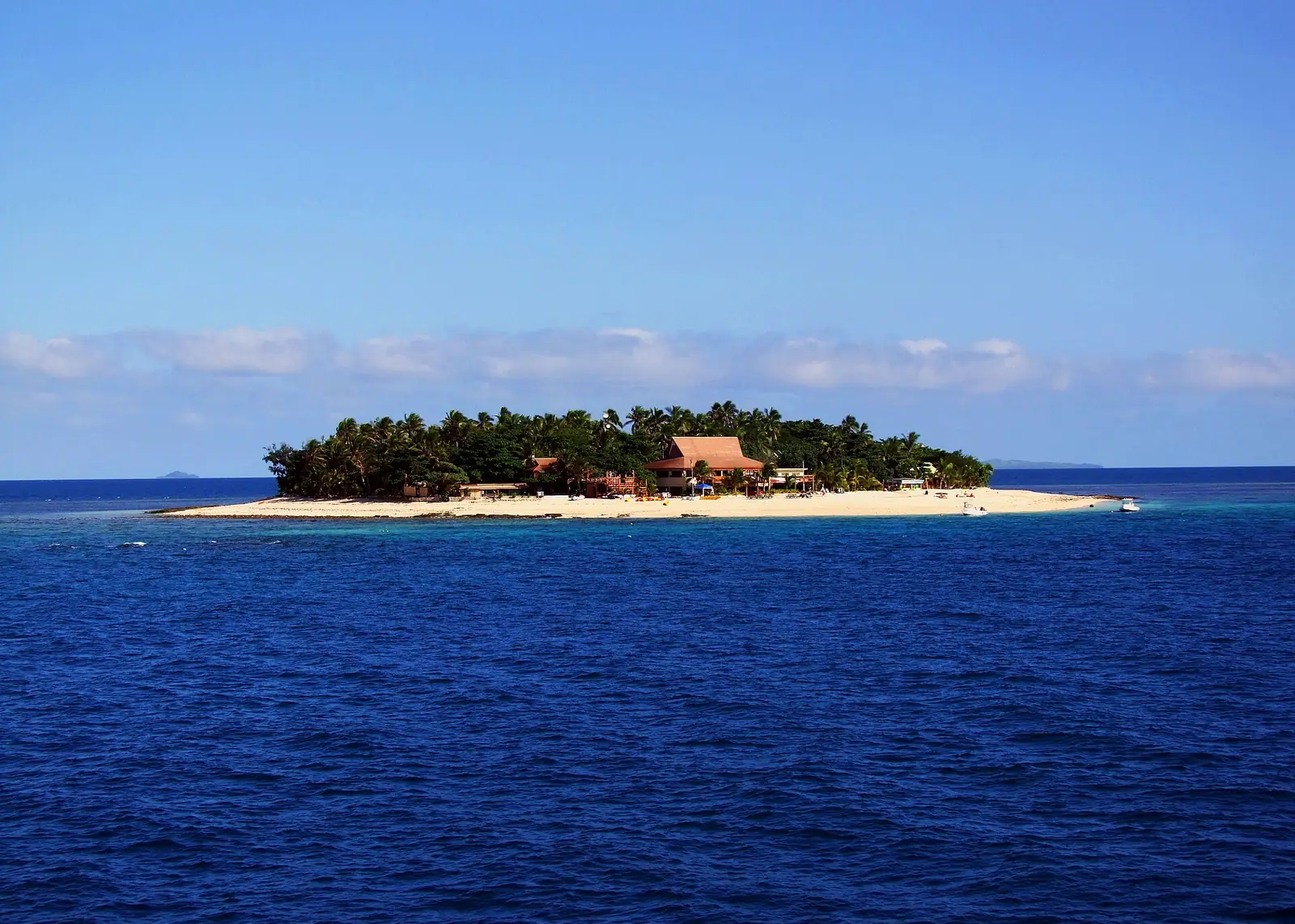
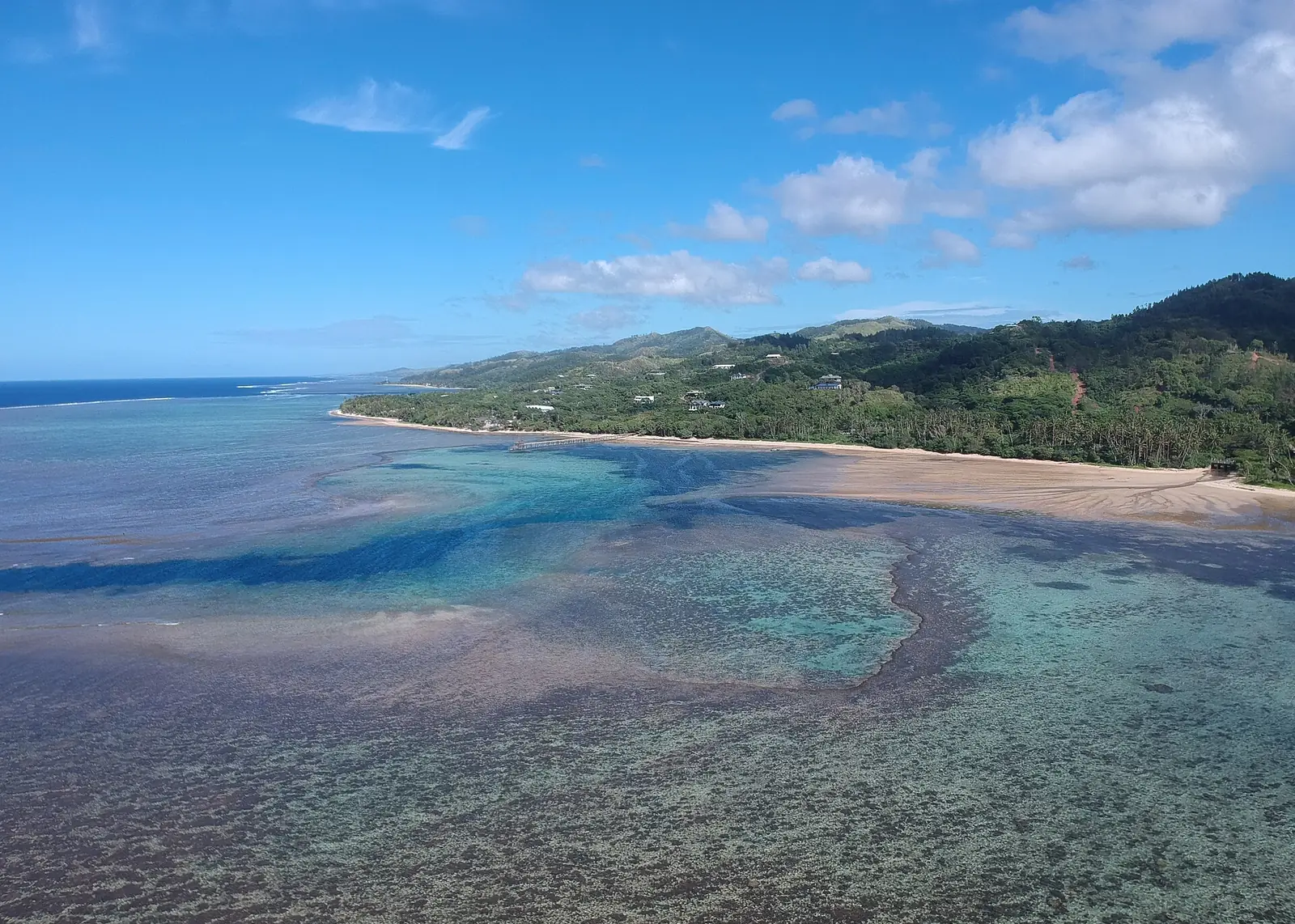
Fiji in pictures


Shorter stays · 1
Work
Short-term work permit
First stay: 1 yr
Arriving in Fiji: first steps
- Secure a place to live and keep proof of your Fiji address for applications and renewals.
- Open a local bank account and keep offshore statements ready, as several routes ask for proof of funds.
- Register with the relevant authority for your route, such as the Registrar of Companies for a business or the Ministry of Education for research or teaching.
- Lodge applications through the IMMI HUB portal where the route requires it, and note that some first applications must be made from outside Fiji.
Questions people ask
How much do you need to invest for residency in Fiji?
Fiji has 1 investor route. Investor permit asks for an investment of at least FJD 300,000 (≈ $133,000) and gives a first stay of 1 year that can be renewed.
Can I retire or live in Fiji on my savings or pension?
Fiji has 1 retirement or pay-to-stay route. Assured income residence asks for an investment of at least FJD 100,000 (≈ $44,500) and gives a first stay of 6 months that can be renewed.
What work visas does Fiji offer foreigners?
Fiji has 5 work visas. Education work permit gives a first stay of 3 years that can be renewed. Long-term work permit gives a first stay of 3 years that can be renewed. Overseas employer permit gives a first stay of 1 year.
How do I get a student visa for Fiji?
Fiji has 1 student visa. Student permit gives a first stay of 3 years that can be renewed.
Can I join my spouse or partner in Fiji?
Yes. Fiji has 2 spouse visas. Spouse of a citizen gives a first stay of 1 year that can be renewed. There is also Spouse of a permit holder.
Compare with
≈ USD figures are approximate: daily reference rates from ExchangeRate-API, dated 12 Oct 2026, refreshed when the site is updated.
Ask the AI about Fiji AI
An AI assistant answers from the published records on this page and cites them. It can't assess your personal eligibility. Don't include personal details.