
Moving to Canada
16 ways to move to Canada in our guide: 1 working holiday visa, 2 business / startup routes, 10 work visas, 1 student visa, 2 spouse visas.
No digital nomad visa. Smallest investment: BC Entrepreneur · Regional, CAD 100k+ ≈ $70k. Checked against official sources on .
The main routes are economic programs like Express Entry and Provincial Nominee Programs, as well as temporary work and study permits. Each has its own requirements and caveats, so it's worth understanding how they differ before you decide.
Working holiday · 1

Working Holiday
Age limit and funds needed: Ages vary by passport · CAD 2,500 ≈ $1,750
Business / Startup · 2

BC Entrepreneur
Investment needed: from CAD 100k ≈ $70k
Work · 10

- Express Entry · TradesSavings needed: from CAD 15k ≈ $11k
- Express Entry · Skilled WorkerSavings needed: from CAD 15k ≈ $11k
- BC PNP Skills ImmigrationIncome needed: from CAD 26k a year ≈ $18k
- Atlantic Immigration–
- Employer work permitFirst stay: 3 yrs
- Global Talent StreamFirst stay: 3 yrs
- Manitoba Skilled Worker–
- Provincial Nominee–
- Quebec skilled worker–
- Saskatchewan Skilled Worker–
Student · 1

Study permit
Savings needed: CAD 23k+ a year ≈ $16k
Spouse visas · 2

For people married to, or in a partnership with, a citizen or permanent resident.
Spouse of a citizen
Spouse of a permanent resident
Free movement and visa-free stays · 1
Visa-free stay (6 months) · Up to 6 months as a visitor
Open to 64 passports: AI, Andorra, Australia, Austria, Barbados, Belgium, BM, Brunei Darussalam, Bulgaria, Cayman Islands, Chile, Croatia, Cyprus, Czechia, Denmark, Estonia, Falkland Islands, Finland, France, Germany, Gibraltar, Greece, Hong Kong, Hungary, Iceland, Ireland, Israel, Italy, Japan, Latvia, Liechtenstein, Lithuania, Luxembourg, Malta, Monaco, MS, Netherlands, New Zealand, Norway, Papua New Guinea, PN, Poland, Portugal, Qatar, Romania, San Marino, SH, Singapore, Slovakia, Slovenia, Solomon Islands, South Korea, Spain, Sweden, Switzerland, Taiwan, TC, The Bahamas, United Arab Emirates, United Kingdom, United States, VA, VG, WS.
Tax
Tax is separate from immigration. The records do not cover tax rules, so how foreign-source income is treated for newcomers is not addressed here.
Standard rules
Canadian income tax residency and worldwide income
Worldwide income
Details
- On: Worldwide income for residents
Tax obligations follow residency status decided on all facts, mainly significant residential ties; residents report world income from all sources.
Taxed on
Worldwide income for residents; Canadian-source income for non-residents
Who it applies to
- Significant residential ties (home in Canada, spouse or common-law partner, dependants) and secondary ties are weighed with length, purpose, intent and continuity of stay.
- A person arriving permanently with significant ties is most likely a resident (part-year resident for the immigration year).
- The CRA decision flow for people entering Canada separates stays of fewer than 183 days from stays of more than 182 days in the year, then asks whether significant ties are being established and whether the person is a treaty-country resident.
Exclusions
- Deemed non-residents (factual residents who are also treaty-country residents) are taxed as non-residents.
Days in the country
- At least 183 days in Calendar year · Day count used in the CRA residency decision flow (page wording: fewer than 183 days versus more than 182 days throughout the year); significant ties and treaty residence are assessed together with it.
Tax residence
Form NR74 asks the CRA for an official residency opinion.
Visas
Residence for tax purposes is separate from immigration status; permanent residents and temporary residents are assessed on residential ties.
Other taxes
World income is reported in Canadian dollars for the period of residence; provincial tax, GST/HST and payroll contributions were not researched.
Checked against official sources on Change log
Standard rules
Canadian tax position of newcomers
Details
- On: World income for the part of the year of residence
- Who: A newcomer is a person in the first year of Canadian tax residence
Newcomers become tax residents when they establish significant residential ties, for most from the first day they live in Canada, and report world income for that part of the year.
Taxed on
World income for the part of the year of residence
Who it applies to
- A newcomer is a person in the first year of Canadian tax residence.
- Residents can claim benefits and credits such as the Canada Groceries and Essentials Benefit before filing their first return.
Tax residence
Part-year residency applies in the year of arrival.
Visas
Applies after arrival under any permanent or temporary status with residential ties.
Checked against official sources on , some details partly verifiedChange log
Standard rules
Deemed disposition on leaving Canada (departure tax)
Details
- On: Capital gains on deemed disposition of property
- Who: Applies to emigrants who sever residential ties and establish a permanent home elsewhere
- Limit: CAD 25k ≈ $18k
On ceasing to be a resident, certain property is treated as sold at fair market value and reacquired at that value, which can produce a capital gain.
Taxed on
Capital gains on deemed disposition of property
Who it applies to
- Applies to emigrants who sever residential ties and establish a permanent home elsewhere.
- Form T1161 lists properties when their total fair market value exceeds CAD 25,000 (≈ $17,500).
Exclusions
- A TFSA can be kept but cannot receive contributions while non-resident.
Limits
- CAD 25,000 (≈ $17,500) · Total fair market value of property owned on departure above which Form T1161 is completed.
Tax residence
Date of departure is entered on the return; factual residents who keep ties are not emigrants.
Visas
Departure applies to residents leaving Canada regardless of visa or permit.
Checked against official sources on Change log
Standard rules
Canada: residents taxed on worldwide income
Territorial
Details
- On: Worldwide income of residents
Every person resident in Canada at any time in a tax year pays income tax on taxable income computed from all sources inside or outside Canada (Income Tax Act s.2 and s.3), and a person who sojourns in Canada 183 days or more in a year is deemed resident; federal rates for 2026 run from 14% to 33%, with provincial or territorial tax on top.
Taxed on
Worldwide income of residents. Non-residents are taxed only on income from employment in Canada, business carried on in Canada and dispositions of taxable Canadian property (s.2(3)).
Who it applies to
- Residence turns on residential ties (home, spouse or common-law partner, dependants in Canada; secondary ties include driver's licence, bank accounts, health insurance), or deemed residence after 183 days of sojourning.
Exclusions
- Non-residents of Canada are taxed only on Canadian-source employment, business and taxable Canadian property income.
Days in the country
- At least 183 days in tax year · A person who sojourned in Canada in the year for 183 days or more is deemed resident for the whole year (Income Tax Act s.250(1)(a))
Tax residence
Newcomers become resident on the first day they live in Canada if they establish significant residential ties; the CRA treats the first resident year as a newcomer year.
Visas
Tax residence depends on ties and days, not on the immigration category; residential ties are the most important factor.
Other taxes
Provincial or territorial income tax applies in addition to federal rates (CRA); GST/HST and provincial sales taxes are separate.
Checked against official sources on Change log
Checked against official sources on Change log
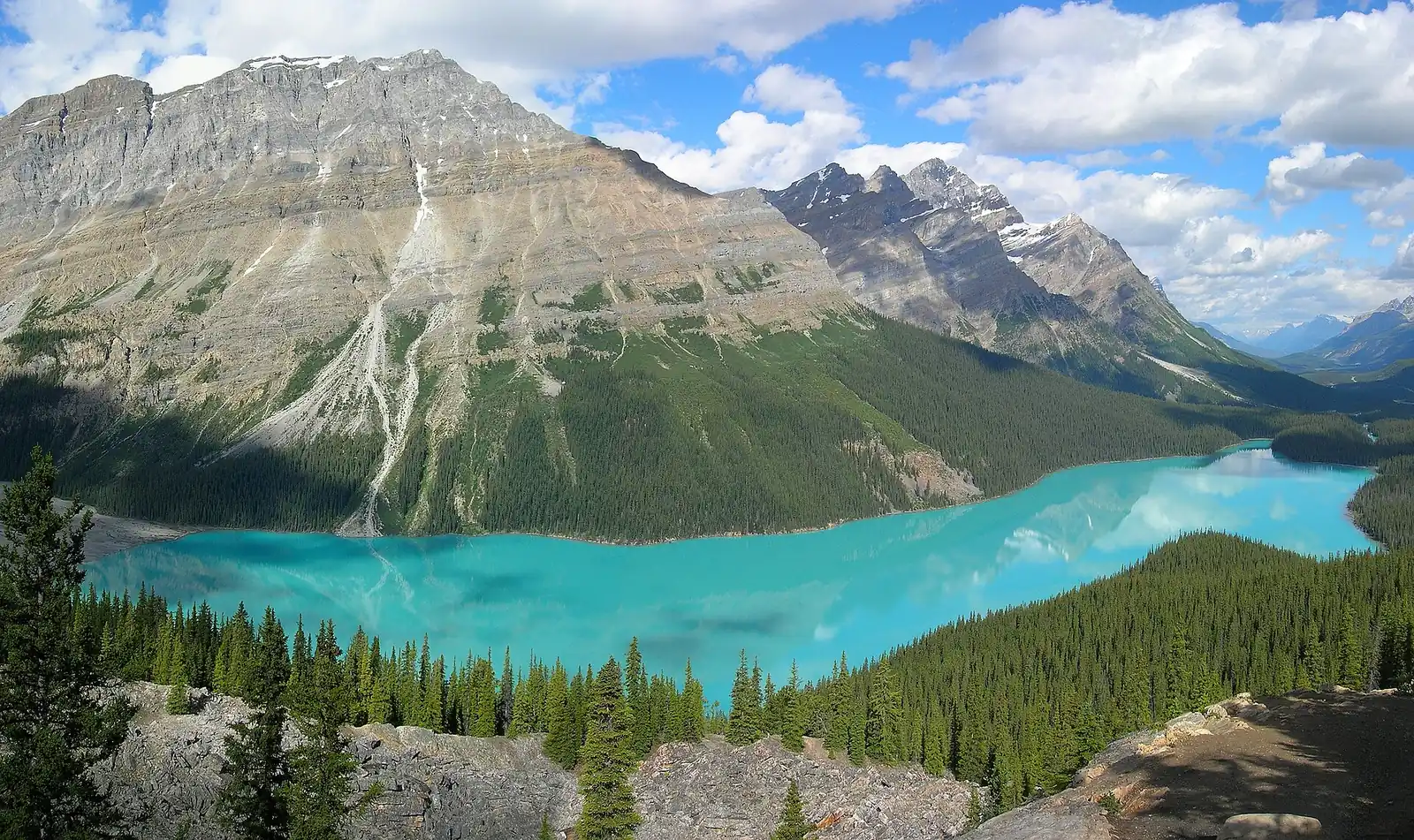
Canada in pictures



Switch to later · 4
Work
Alberta Opportunity stream
Work
Express Entry · CEC
Work
Ontario Workforce Priority
Work
Post-grad work permit
First stay: 3 yrs
Path to permanent residence · 1
- PR after 1 year · Express Entry: Canadian Experience Class (CEC)
Arriving in Canada: first steps
- Ensure you have valid health insurance for your initial period, as provincial coverage may not start immediately.
- Have a Canadian address ready for correspondence and official documents.
- Open a bank account to manage your finances and set up direct deposits.
- Apply for a Social Insurance Number if you are authorized to work.
- Keep your immigration documents and permits up to date and follow any conditions attached to your status.
Questions people ask
Does Canada have a working holiday visa?
Yes. Canada has 1 working holiday visa. Working Holiday gives a first stay of 2 years.
Can I move to Canada by starting a business?
Canada has 2 business or startup routes. BC Entrepreneur · Base asks for an investment of at least CAD 200,000 (≈ $140,000). BC Entrepreneur · Regional asks for an investment of at least CAD 100,000 (≈ $70,100).
What work visas does Canada offer foreigners?
Canada has 10 work visas. BC PNP Skills Immigration asks for a salary from CAD 26,057 a year (≈ $18,300). Employer work permit gives a first stay of 3 years that can be renewed. There is also Atlantic Immigration.
How do I get a student visa for Canada?
Canada has 1 student visa. Study permit asks for savings of at least CAD 23,448 a year (≈ $16,400).
Can I join my spouse or partner in Canada?
Yes. Canada has 2 spouse visas. There is also Spouse of a citizen and Spouse of a permanent resident.
Compare with
≈ USD figures are approximate: daily reference rates from ExchangeRate-API, dated 12 Oct 2026, refreshed when the site is updated.
Ask the AI about Canada AI
An AI assistant answers from the published records on this page and cites them. It can't assess your personal eligibility. Don't include personal details.